
Business
Experts Criticize New N70,000 Minimum Wage as Insufficient Amid Economic Strain

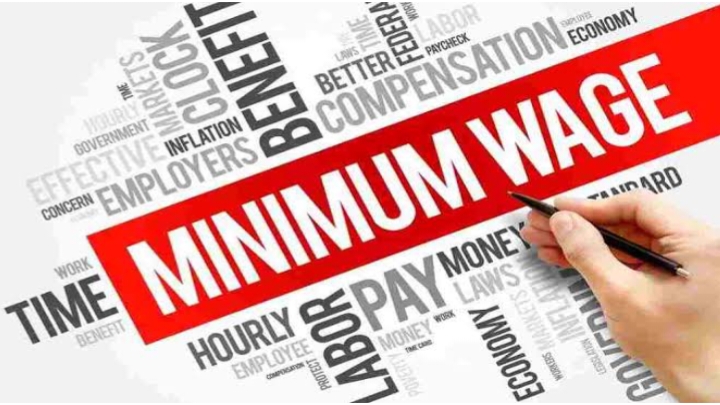
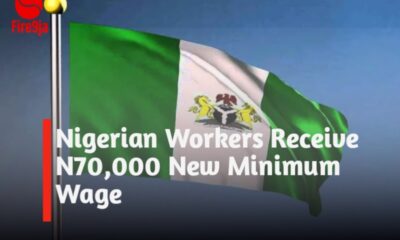
Economists and political analysts have expressed significant concern over the recently approved minimum wage of N70,000 for Nigerian workers.
In interviews conducted with the News Agency of Nigeria (NAN) on Friday in Abakaliki, these experts criticized the amount as insufficient given the country’s current economic challenges.
On Thursday, President Bola Tinubu approved the N70,000 minimum wage for civil servants, with a commitment to review this amount every three years.
Despite this commitment, Mr. Collins Anike, an economist, argued that the newly approved wage falls short of addressing workers’ needs and does not fully reflect the economic realities faced by the public.
He acknowledged the President’s intention to revisit the wage periodically but emphasized that the initial amount should have been set higher to better align with the demands of the populace.
Political analyst Mr. Titus Ezeh echoed similar sentiments, urging the government to undertake a comprehensive review of key economic sectors.
He highlighted the need for adjustments in areas such as inflation control, energy tariffs, and food security. Ezeh stressed that addressing these issues is crucial to alleviating the financial strain on the general population.
Meanwhile, Mrs. Regina Agbo, a petty trader, voiced her concerns about the adverse effects of increased electricity tariffs on small businesses and the broader economy.
She pointed out that the rising costs of production and the escalating prices of goods have created significant difficulties for businesses and the economic system at large.
The discrepancy between the government’s approved minimum wage and the demands of the organized labor is notable.
While organized labor had proposed a minimum wage of N250,000, the government and the private sector had recommended a lower figure of N62,000.
This gap highlights the ongoing debate over fair compensation and the need for economic policies that better support workers amidst prevailing economic conditions.











It has been noted that there is now an increase in fuel all around Nigeria, from … to 1000 plus in fuel stations.
It was also noted that Dangote Petroleum Refinery increased the price to 1,175 per litre and diesel has been increased to 1,620 per litre.
This new spike in fuel increase has caused Nigerians to lament widely, wondering why this change happened all of a sudden.

- MTN Nigeria Communications Plc (MTNN) – Strong telecom growth and 5G expansion.
- Dangote Cement Plc (DANGCEM) – Leading cement maker benefiting from infrastructure demand.
- Guinness Nigeria Plc (GUINNESS) – Consumer stock with solid turnaround potential.
- Okomu Oil Palm Plc (OKOMUOIL) – Agriculture stock tied to palm oil demand.
- Seplat Energy Plc (SEPLAT) – Energy player with gas and oil sector exposure.
- Zenith Bank Plc (ZENITHBANK) – Tier-1 bank with strong financial performance.
- Guaranty Trust Holding Company Plc (GTCO) – Leading bank with diversified revenue streams.
- Presco Plc (PRESCO) – Palm oil producer with export and dividend potential.
- NASCON Allied Industries Plc (NASCON) – FMCG stock with strong fundamentals.
- Aradel Holdings Plc (ARADEL) – Growing energy sector stock with upstream exposure.

It has been noted that the National Youth Service Corps (NYSC) and British American Tobacco Nigeria Foundation (BATNF) plan to renew their partnership in agribusiness.
The new project is to involve youth in the agriculture business, widen their horizons, and educate them about the agritech sector.
The general manager shared that “The foundation is not only providing grants but also building a system of mentorship, structure, and support that enables corps members to see agribusiness as a serious enterprise pathway.” The plan is to use the NYSC platform to engage youths.

Fans React as Wizkid Joins Burna Boy–DJ Tunez Drama

Moses Bliss Apologises After Graphic Design Backlash

Is AI Replacing Artists? DJ Neptune Shares Concerns


-
 News18 hours ago
Akpabio Represents Tinubu at Lagos Bridge Commissioning
-

 Sport17 hours ago
Lookman Applauds Atlético Madrid After 2–0 Win Over Barcelona
-
 Entertainment14 hours ago
Moses Bliss Apologises After Graphic Design Backlash
-
 Entertainment16 hours ago
Is AI Replacing Artists? DJ Neptune Shares Concerns
-
 Entertainment14 hours ago
Fans React as Wizkid Joins Burna Boy–DJ Tunez Drama