
Sport
Māori King Tuheitia Passes Away at 69, Nation Mourns

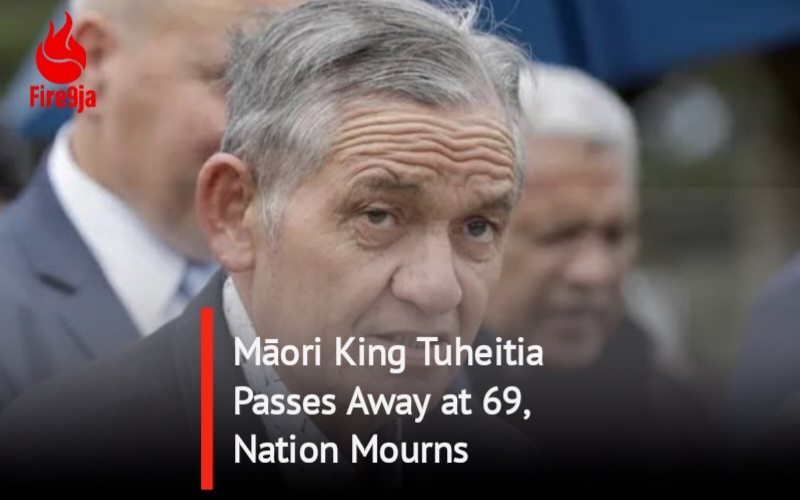
Kiingi Tuheitia Pōtatau Te Wherowhero VII, the Māori King of New Zealand, has passed away at the age of 69, surrounded by his wife and three children.
His death follows a period of recovery in the hospital after undergoing heart surgery. The news was confirmed by the Kiingitanga, the Māori King movement, on Friday morning local time (Thursday evening GMT).
Rahui Papa, a spokesperson for the Kiingitanga, expressed the profound grief felt across New Zealand, especially among the Māori community.
“The passing of Kiingi Tuheitia is a moment of great sadness for Te Kiingitanga, Māoridom, and the entire nation. A chief has gone to the great beyond. Rest in love,” he said.
Born in 1955 as Tūheitia Paki, King Tuheitia ascended to the throne in 2006 after the passing of his mother, Te Arikinui Dame Te Atairangikaahu, who was the longest-serving Māori monarch.
Throughout his 18-year reign, King Tuheitia became a symbol of unity for his people, often advocating for solidarity among Māori in the face of policies that disproportionately affected their community.
One of his more notable statements came in a recent call for unity, in which he encouraged the Māori to face their challenges together.
“In this storm, we are strong. Together. The wind in our sails is kotahitanga [unity], and with that we will reach our destination,” King Tuheitia urged, highlighting his belief in collective strength.
His successor will be determined by the leaders within the Kiingitanga movement, but the announcement is expected to come after his funeral rites are completed.
It has been reported that King Tuheitia will lie in state at Turangawaewae Marae, the traditional seat of the Māori King, for five days. Afterward, he will be taken to Taupiri Mountain, a sacred burial site for Māori royalty.
The Māori King role has deep historical roots, dating back to 1858 when it was created to serve as a unifying figure for the Māori people.
The position, although largely ceremonial, was established to protect Māori land from British colonization and to preserve their culture and traditions. Over the years, the role has been a focal point for Māori advocacy and cultural preservation.
New Zealand’s Prime Minister, Christopher Luxon, paid tribute to King Tuheitia on social media, lauding his dedication to his people and his commitment to maintaining the traditions of the Kiingitanga.
Luxon remarked, “His unwavering commitment to his people and his tireless efforts to uphold the values and traditions of the Kiingitanga have left an indelible mark on our nation.”
Former Prime Minister Dame Jacinda Ardern also shared her respect for the late king. “You have been an advocate for Māori, for fairness, justice, and prosperity.
You wanted children, young people, and those who have been left behind to have opportunities and hope,” she said, honoring his dedication to uplifting the marginalized in his community.
King Tuheitia’s influence extended beyond New Zealand, as he had established international relationships throughout his reign. He attended the coronation of King Charles III in May 2023, even meeting with the British monarch in private before the celebration.
Following the news of his passing, King Charles expressed his condolences, stating that both he and Queen Camilla were “profoundly saddened” by the death of King Tuheitia. “He was deeply committed to building a strong future for Māori and Aotearoa New Zealand, one founded on culture, traditions, and healing, which he pursued with wisdom and compassion,” King Charles said.
He also added a Māori proverb, “Kua hinga te tōtara i Te Waonui a Tāne” (A mighty Totora tree has fallen), referencing a sacred native New Zealand tree that symbolizes strength and reverence.
One of King Tuheitia’s notable moments in the public eye came in 2014 when he made headlines for declining to meet Prince William and Princess Kate during their visit to New Zealand.
He felt that the 60 to 90 minutes allocated for the meeting was not enough time to honor the Māori cultural customs that were required to properly receive guests of their stature.
The passing of King Tuheitia marks the end of an era in New Zealand’s Māori leadership. His legacy as a unifying figure, a protector of Māori culture, and an advocate for the rights of his people will be remembered for years to come.
As the nation mourns his loss, attention now turns to the Kiingitanga, who will choose his successor in accordance with Māori tradition.


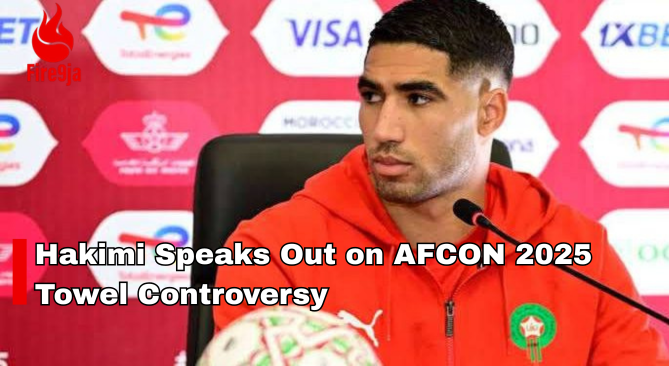
Captain of the Morocco national team, Achraf Hakimi, has shared his thoughts on the controversial topic surrounding AFCON 2025.
It can be noted that the team was accused of taking towels belonging to opposition goalkeepers during matches, which sparked criticism from fans and observers, with many calling for consequences.
Hakimi expressed his disappointment over the situation, stating “I don’t feel proud about the image we gave off with the towels. Even though that happened, the team did well in the competition. We showed respect for our opponents in the tournament.”

Ademola Lookman has praised Atlético Madrid following their 2–0 victory over Barcelona.
It can be noted that the match ended 2–0, with goals scored by Julián Álvarez and Alexander Sørloth.
Speaking in a recent interview, Lookman commended the team’s performance and unity “It was a good result. The performance of the team, especially not to concede here, shows the work everyone’s been doing and the togetherness.”

Young Arsenal player Max Dowman is making headlines after reaching a major milestone—becoming the youngest player to feature in the UEFA Champions League knockout stages.
The previous record was held by Lamine Yamal, who made his appearance at 16 years and 223 days. Dowman, however, has now broken that record at just 16 years and 97 days.
The youngster continues to show great promise, adding another impressive achievement to his early career.

Sam Spedy Weds Partner Simi in Beautiful Ceremony

Tobi Makinde Clears Air on Funke Akindele Rumours

“My Relationship with God Is Personal” — Ayra Starr Speaks On Faith


-
 Entertainment10 hours ago
“You’re Going to Jail” — Cardi B Warns Thieves That Stole Her Card
-
 Weddings8 hours ago
Sam Spedy Weds Partner Simi in Beautiful Ceremony
-
 Entertainment9 hours ago
Tobi Makinde Clears Air on Funke Akindele Rumours
-
 Sport11 hours ago
Hakimi Speaks Out on AFCON 2025 Towel Controversy
-
 Entertainment9 hours ago
“My Relationship with God Is Personal” — Ayra Starr Speaks On Faith