
Entertainment
International Women’s Day: Celebrating Women Around the World


Every year on March 8, people around the world come together to celebrate International Women’s Day (IWD). This day is both a recognition of women’s achievements and a call to action for gender equality. Let’s explore the history, significance, and ongoing relevance of this global day.
Origins and Historical Milestones
The roots of International Women’s Day trace back to the early 20th century, a period marked by rapid industrialization, booming populations, and radical ideologies. The first observance, known as “Woman’s Day,” took place on February 28, 1909, in New York City.
Organized by the Socialist Party of America, it honored the 1908 garment workers’ strike in New York, where women protested against working conditions.
In 1910, the International Socialist Women’s Conference convened in Copenhagen. Inspired by the American socialists, German delegates Clara Zetkin, Käte Duncker, Paula Thiede, and others proposed the establishment of an annual “Women’s Day” to promote equal rights, including women’s suffrage. The proposal was unanimously accepted by over 100 women from 17 countries, though no specific date was set.
The inaugural International Women’s Day was celebrated on March 19, 1911, in Austria-Hungary, Denmark, Germany, and Switzerland. Over a million people participated, demanding rights to work, vote, and hold public office, and protesting against employment discrimination.
A pivotal moment occurred on March 8, 1917, when women in Petrograd (now St. Petersburg) initiated strikes and demonstrations demanding “Bread and Peace” amidst World War I. This act sparked the February Revolution, leading to the abdication of Tsar Nicholas II and the eventual granting of women’s suffrage in Russia.
Establishment of March 8 as the Official Date
The significance of March 8 was solidified in 1921 during the Second International Conference of Communist Women in Moscow. Delegates honored the role of women in the Russian Revolution by designating March 8 as International Women’s Day.
Evolution Through the Decades
Initially linked to socialist movements and communist countries, IWD gained broader recognition over time. The feminist movements of the 1960s and 1970s revitalized the day, transforming it into a platform for activism addressing issues like equal pay, reproductive rights, and violence against women.
In 1975, during the International Women’s Year, the United Nations celebrated International Women’s Day on March 8 for the first time. Two years later, in 1977, the UN General Assembly officially invited member states to proclaim March 8 as the UN Day for women’s rights and world peace.
Contemporary Significance and Themes
Today, International Women’s Day is celebrated globally, reflecting on progress made and advocating for further advancements in gender equality.
Each year, the United Nations selects a theme to highlight specific areas of concern. For instance, the 2025 theme, “Accelerate Action,” emphasizes the urgency in addressing ongoing challenges to women’s rights.
Global Observances and Traditions
IWD customs vary worldwide. In some countries, it’s an official holiday, while in others, it’s observed more informally. Activities range from protests and rallies advocating for women’s rights to cultural events celebrating women’s achievements.
For example, in Houston, Texas, events include luncheons, museum exhibitions, and festivals, all aiming to honor women’s contributions and address persisting inequalities.
Despite significant progress, challenges persist. Recent setbacks, such as the overturning of abortion rights in some regions, signal potential threats to women’s advancements globally.
UN Secretary-General António Guterres has highlighted the increasing threats to women’s rights, calling for collective action to counter these challenges.
Moreover, women continue to play pivotal roles in addressing global issues. On IWD 2025, Reuters mentioned the contributions of twelve women leading the fight against climate change, showing the importance of female leadership in tackling pressing environmental challenges.
International Women’s Day serves as a powerful reminder of the strides and efforts made toward gender equality and the work that remains.
It’s a day to celebrate achievements, recognize challenges, and renew commitments to creating a world where every woman and girl can reach their full potential. As we observe the International Women’s Day (IWD), let’s honor the past, acknowledge the present, and strive for a more equitable future.














Nigerian singer Wizkid has reacted to the reported clash between Burna Boy and DJ Tunez.
Wizkid took to social media to mock Burna Boy, making controversial remarks and referencing Sean Diddy Combs.
His comments have since sparked reactions online, with fans divided over the ongoing tension between the artists.
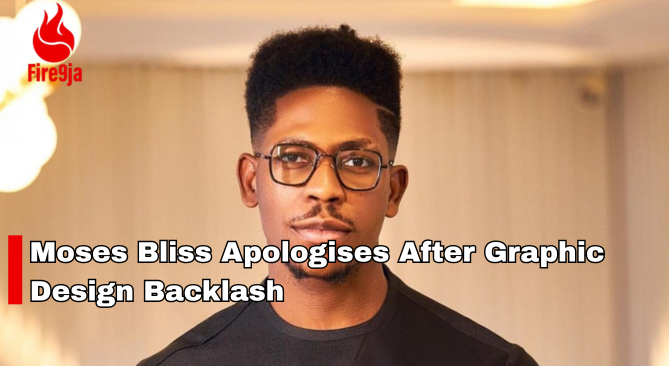
Nigerian gospel singer Moses Bliss has reacted to the public backlash he faced following a request he made to graphic designers.
It can be noted that the singer took to social media asking for a graphic designer to create a flyer, which later turned into a challenge that many criticised, stating it undervalued creatives.
Moses Bliss has now issued an apology, saying “I sincerely apologize to every graphic designer who felt disrespected or undervalued… that was never my intention.”
He added “The goal was to give creatives a platform to showcase their work, not to undermine their value.”

Nigerian DJ, DJ Neptune has expressed concern about the growing influence of artificial intelligence in the music industry and how it could affect jobs.
It can be noted that similar concerns have previously been raised online, especially on platforms like Twitter, where many fear AI could replace artists and producers.
He wrote “AI is quietly about to retire the entire music production and mastering industry. I have seen scary things tonight. God help all of us in this ecosystem.”
He further shared how advanced AI tools are already capable of producing high-quality music, raising questions about the future of human creativity in the industry.

Fans React as Wizkid Joins Burna Boy–DJ Tunez Drama

Moses Bliss Apologises After Graphic Design Backlash

Is AI Replacing Artists? DJ Neptune Shares Concerns


-

 News21 hours ago
Akpabio Represents Tinubu at Lagos Bridge Commissioning
-

 Sport20 hours ago
Lookman Applauds Atlético Madrid After 2–0 Win Over Barcelona
-
 Entertainment18 hours ago
Moses Bliss Apologises After Graphic Design Backlash
-
 Entertainment18 hours ago
Fans React as Wizkid Joins Burna Boy–DJ Tunez Drama
-
 Entertainment20 hours ago
Is AI Replacing Artists? DJ Neptune Shares Concerns