
News
Rising Fuel Prices Put Nigerians in Hardship

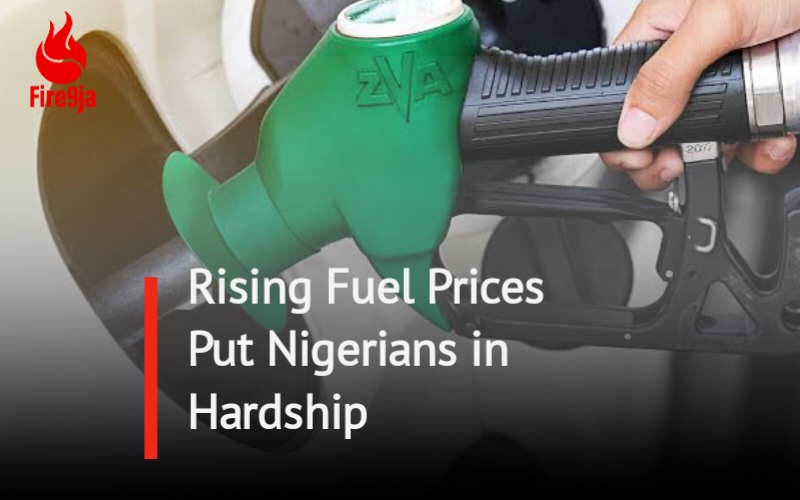
The continuous rise in petrol prices in Nigeria has created significant challenges for many, particularly low-income earners, who are finding it increasingly difficult to manage daily expenses.
The escalating cost of transportation, driven by the fuel price hike, has become a major burden for workers, students, and traders alike, making the commute to work or the market a costly endeavor.
The financial pressure is mounting, especially for households already struggling to make ends meet, adding to their overall anxiety about survival.
The recent price hike, which took effect last week, has seen petrol prices soar to unprecedented levels, ranging between N850 and N1,400 per liter depending on the location.
This has resulted in a ripple effect, causing the prices of essential goods and services to rise as well.
Across Nigeria, protests have erupted in response to the dire situation, with citizens demanding immediate action from the government to reduce the cost of living and ease the burden on the population.
A popular slogan, #EndBadGovernance, has emerged from these protests, reflecting the public’s frustration.
Religious and civic leaders have also expressed their concerns. Archbishop Matthew Kukah, the Catholic Bishop of Sokoto Diocese, called on President Bola Tinubu and his administration to take urgent measures to alleviate the suffering of Nigerians.
He emphasized that the government must address the skyrocketing fuel prices and the insecurity plaguing the country.
Similarly, the Arewa Youth Consultative Forum (AYCF) has voiced strong opposition to the fuel price increase, warning the government against ignoring the struggles of ordinary Nigerians.
The forum’s President-General, Yerima Shettima, criticized the government’s handling of the situation, stating that the rising costs have left many Nigerians on the edge.
Several Nigerians shared their stories, highlighting the hardship caused by the fuel price hike.
Amina Abubakar, a sales representative, expressed her difficulty in managing her budget as her transportation costs have significantly increased, leaving little room for basic necessities like food and rent.
Eche John, an Abuja resident, lamented that his daily commute has doubled in cost, with no corresponding increase in salary, leading to a strain on his finances.
The increase in transportation expenses has also driven up the price of everyday goods, such as a sachet of milk, which now costs N300 instead of N200.
The worsening situation is pushing many Nigerians to consider drastic measures. Johnson Okpe, a Point of Sale (POS) operator, revealed that he might have to quit his job because his salary can no longer cover his transportation costs.
Similarly, Chioma Eze, a salesgirl commuting from Mararaba to Wuse market in Abuja, expressed frustration that her daily transport expenses have more than doubled, forcing her to consider leaving her job.
Secondary school teacher Auwal Ibrahim shared a similar story, noting that more than half of his salary now goes towards transportation, leaving him with little to cover other expenses.
The challenges have also forced some workers to resign from their jobs. Private security personnel Hassan Abdul and housekeeper Ekaete Frederick both left their positions due to the unsustainable transportation costs.
Both expressed concerns about finding alternative employment or ways to make ends meet, with Ekaete contemplating hawking sachet water as a possible alternative.
Commercial motorcyclist Uche Emeka pointed out that the high cost of transportation has led many Nigerians to opt for walking instead of using motorcycles, significantly reducing his income.
The worsening economic situation has raised fears about an increase in crime, as many Nigerians, pushed to their limits, may resort to illegal activities out of desperation.
Paul Owoicho, a concerned citizen, warned that hunger and frustration could lead to a rise in criminal behavior if the government does not take swift action to address the crisis.
As the pressure on low-income earners continues to mount, Nigerians are calling for urgent intervention to address the high cost of fuel, food, and transportation.
Without immediate action, the financial strain could push many more people into poverty, exacerbating the already difficult living conditions across the country.


The Academic Staff Union of Universities (ASUU) has reportedly declared a strike at Taraba State University over outstanding salary-related demands and delays in payments.
The strike is scheduled to begin today, October 12, 2026. According to the union’s chairman, the union had been engaging the Taraba State Government over its outstanding demands since February 2026.
“The union had exercised considerable patience and demonstrated its commitment to dialogue since February 2026, when it began engaging the Taraba State Government over the outstanding issues,” Mbave said.
“The union had earlier suspended its planned industrial action following an appeal by the government for additional time through the Office of the Head of Civil Service, in the interest of maintaining industrial harmony,” the chairman added.
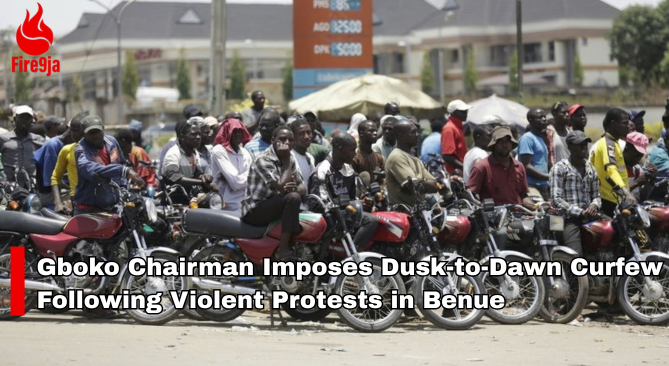
The Chairman of Gboko Local Government Area of Benue State, Torseer Yina, has imposed a dusk-to-dawn curfew in the ancient town.
The curfew takes effect from Thursday, October 8, 2026, following unrest and violent protests in the area.
According to reports, the action was taken to contain the unrest and violent protests by members of BEMOA following the death of one of its members by unknown gunmen.
The protest, which was reportedly hijacked by hoodlums, turned violent after an angry mob burnt two vehicles belonging to the Benue State Civil Protection Guards.
The Gboko council chairman said the curfew takes effect immediately and warned that anyone caught flouting the order or breaching public peace would be decisively dealt with.
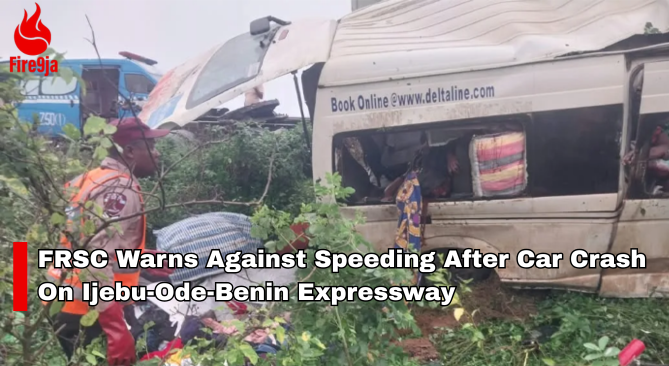
Nine people have died in a fatal road crash along the Ijebu-Ode-Benin Expressway in Ogun State.
The crash occurred on Monday at about 4:55pm around the Bethel area along the Ijebu-Ode/Ore axis of the expressway. It involved a white Toyota Hiace commercial bus belonging to Delta Line and a white Sino truck operated by Bill Gas Solution Ltd.
According to the Federal Road Safety Corps (FRSC), all nine people involved in the crash, comprising three males and six females, died in the incident.
The FRSC said the crash occurred while it was raining and the road was wet, with preliminary investigations identifying speed violation as the probable cause.
The FRSC rescue team arrived at the scene shortly after receiving the report, while the bodies of the victims were taken to the General Hospital Morgue in Ijebu-Ode.
The Ogun State Sector Commander, Oludare Ogunjobi, urged motorists, especially commercial drivers, to obey speed limits and exercise extra caution when driving in the rain.

Judge Tells Duane Davis He Must Face Justice for Tupac’s Murder

Timini Egbuson Reflects on Embracing YouTube Movies in Nollywood


