
Politics
Sowore Accuses Wike of Corruption in Nigerian Judiciary

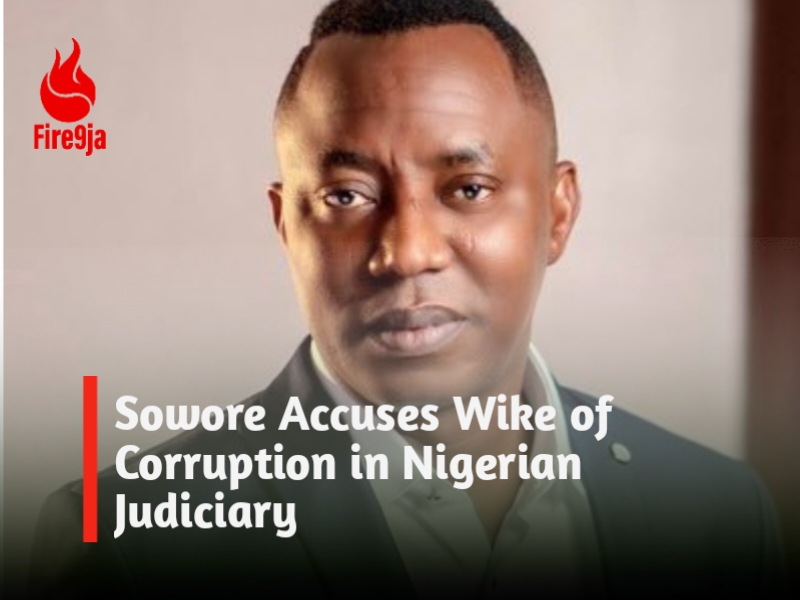
The issue of corruption within the Nigerian judiciary has come under intense scrutiny, with outspoken activist and political figure Omoyele Sowore accusing Nyesom Wike, the former governor of Rivers State, of being a significant corruptor in this vital institution.
Sowore’s allegations have sparked renewed debates about the integrity of the judiciary in Nigeria and the potential implications for democracy and governance.
Sowore refers to Wike as the “Golden Boy of the Judiciary,” a nickname that highlights his purported influence and ability to manipulate judicial outcomes to his advantage.
According to Sowore, Wike has played a key role in undermining the judicial system, particularly during his time as governor.
He claims that Wike’s actions have led to a situation where judges are compromised, which severely impacts the rule of law.
One of the most striking claims made by Sowore concerns Justice Zainab Bulkachuwa, the former President of the Court of Appeal.
He alleges that Wike provided her with a contract to construct the Court of Appeal in Port Harcourt, which subsequently resulted in a close relationship between the judge and the governor.
This relationship, Sowore suggests, allowed Wike to receive favorable judicial decisions without even having to ask for them, raising serious questions about judicial independence.
Sowore asserts that Wike’s history of judicial corruption predates his governorship.
He alleges that Wike was the “go-to guy” for buying judgments or influencing judges during election tribunals or contentious legal matters.
This reputation for corruption has reportedly enabled Wike to exert considerable control over judicial processes, undermining the integrity of the legal system.
In addition to these allegations, Sowore claims that Wike’s corrupt practices include building houses for judges, which he describes as a direct form of bribery.
He further alleges that Wike is currently allocating valuable land to senior judges in prime areas of Abuja, suggesting that these actions are part of a broader scheme to secure loyalty and favorable rulings from judicial officers.
Sowore’s comments have sparked outrage among many Nigerians who are concerned about the state of the judiciary and the rule of law in the country.
The implications of such allegations are profound, as they suggest a judicial system that is not only compromised but also susceptible to political manipulation.
This erosion of trust in the judiciary could have far-reaching effects on democracy, governance, and the protection of citizens’ rights.
As the discourse surrounding judicial corruption continues, calls for greater transparency and accountability in the Nigerian judiciary are becoming more urgent.
Activists and civil society organizations are advocating for reforms to restore public confidence in the legal system and ensure that justice is served fairly and impartially.













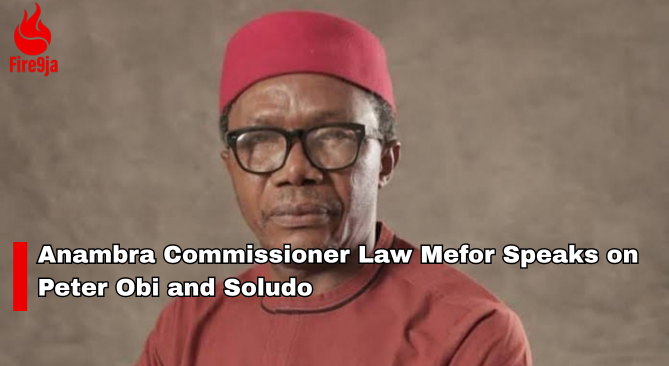
Anambra State Commissioner for Information and Value Reorientation, Law Mefor, speaks on Peter Obi and shares that he made wonderful achievements as a governor and roots for him for the presidency.
“The intention of the Anambra State government is not to indict Peter Obi. Peter Obi did well as governor.
“There is no rift between Governor Soludo and Peter Obi. They are both in politics, and they have their interests to defend.”
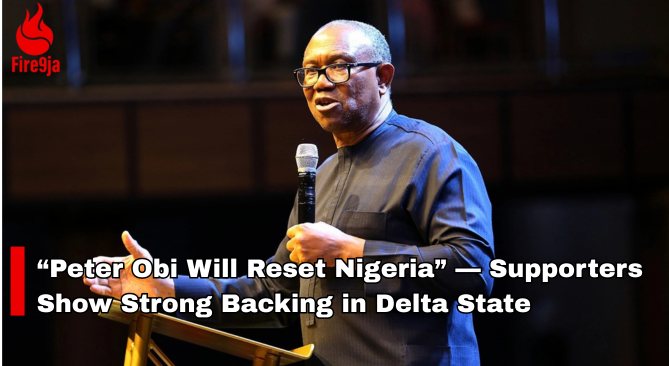
Peter Obi makes headlines as he received huge recognition and a welcome in Delta State.
A crowd came out to support the politician and show their support for him ahead of the election next year.
They moved with the message, “Peter Obi will reset Nigeria, Peter Obi for president.” Many shared their beliefs that Peter Obi can truly help Nigeria. This has gained some attention, and people shared their thoughts.
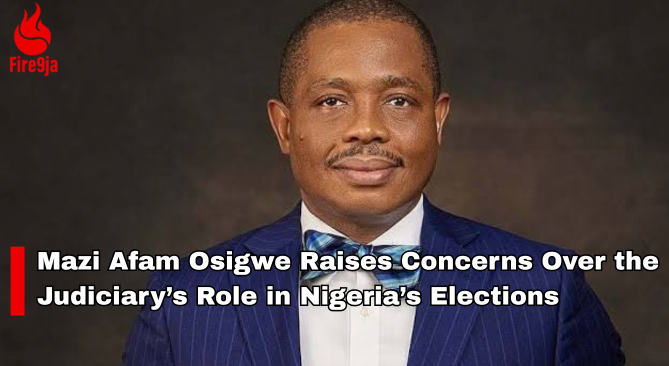
Former President of the Nigerian Bar Association, Mazi Afam Osigwe, speaks on the election and a popular notion that is happening. He shared how some politicians depend on the courts to win their elections instead of the voters (the people).
“A judge once presented a paper called ‘The Judicialisation of the Electoral Process.’ He argued that because of the difficulty of proving non-compliance with the Electoral Act, the courts have gradually and increasingly usurped the role of the voters. I couldn’t agree more.”
“They believe that between polling units and collation centres—especially at night—miracles happen before daybreak. So why vote?” he asked.

Judge Tells Duane Davis He Must Face Justice for Tupac’s Murder

Timini Egbuson Reflects on Embracing YouTube Movies in Nollywood


