
Business
Dangote: Our Petrol is 15% Cheaper Than NNPCL’s Imported Fuel

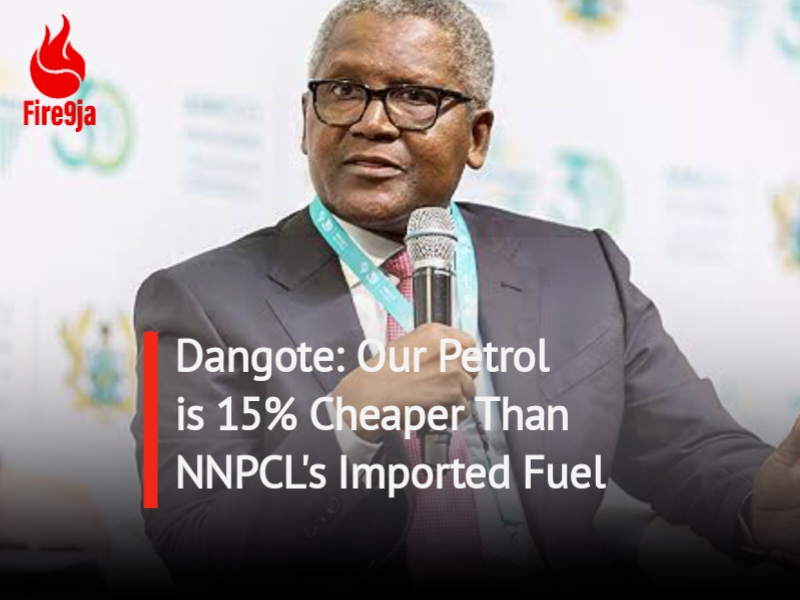
Aliko Dangote, President of the Dangote Group and Africa’s wealthiest man revealed that petrol produced by the Dangote Refinery is 15% cheaper than the fuel imported by the Nigerian National Petroleum Company Limited (NNPCL).
He made this statement during an interview with Bloomberg Television, addressing recent developments in Nigeria’s fuel pricing.
His comments followed NNPCL’s announcement that it purchased petrol from the Dangote Refinery for N898 per litre on September 15, 2024.
Shortly after, NNPCL raised fuel prices across the country, with costs ranging from N950 to N1,100 per litre at filling stations.
This sudden price increase created confusion in the oil and gas sector, fueling public concern about the rising cost of fuel.
Dangote clarified the situation, explaining that NNPCL had purchased approximately 800,000 metric tons of imported gasoline around the same time it bought fuel from the Dangote Refinery.
He emphasized that the petrol produced by his refinery was sold at a lower price compared to NNPCL’s imported fuel.
According to Dangote, the price NNPCL quoted for his refinery’s fuel was not the actual cost but rather the final price after adding profit margins and other expenses incurred by the state-owned company.
He stressed that Nigerians were unaware of the full cost NNPCL incurs when importing fuel, noting that imported gasoline is about 15% more expensive than the petrol produced domestically by Dangote’s refinery.
Dangote explained that NNPCL’s higher price reflects these added costs, making his refinery’s fuel more affordable by comparison.
Addressing the broader fuel pricing issue, Dangote suggested that NNPCL could opt for a basket price approach or consider removing the remaining fuel subsidies altogether.
He stated that removing the subsidies would create a more transparent pricing structure and allow the market to adjust accordingly.
This discussion on fuel pricing comes amid calls from Dangote and other industry stakeholders for the Nigerian government to eliminate fuel subsidies.
Earlier reports indicated that petrol marketers had been purchasing NNPCL’s imported fuel at an average price of N870 per litre, further highlighting the price discrepancy between locally produced and imported fuel.











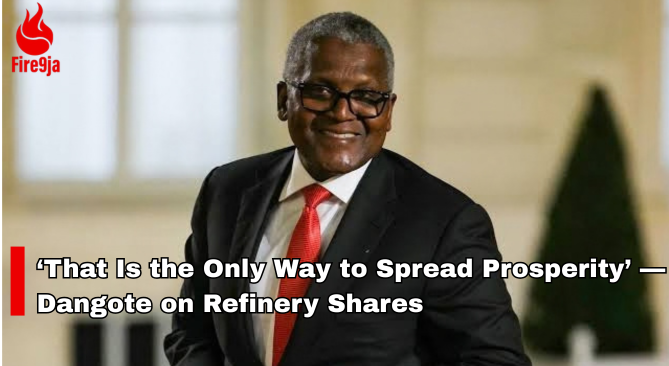
Businessman Aliko Dangote has explained why he believes Nigerians should participate in the ownership of his refinery by purchasing shares.
He was asked by singer Davido why Nigerians should participate, and Dangote explained that the initiative would help spread wealth and prosperity across Africa.
“Well, it’s very important because that is the only way to spread prosperity and wealth throughout Africa. And like I said, this is not going to be the first and the last. We will continue with even our fertilizer. By the time we finish listing, every single one will own part of our businesses and we will create a pool of cash…”
He explained that the goal is to create opportunities for more Nigerians to own a stake in the businesses and help spread wealth across the country.
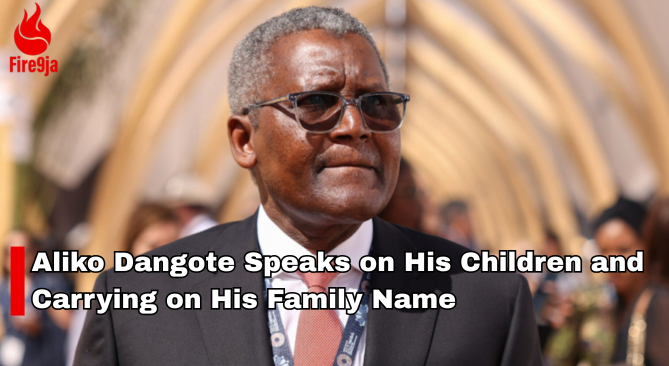
Aliko Dangote speaks on his lineage and addresses not having a son as he was asked about not having a son to carry his name and achievements.
“That is not my priority because God controls everything. You can pray for God to give you a son, but he might be the one to take down the name of the family.”
Instead, he shared that he does not mind not having a son. “I don’t think a son would have done better than the three daughters I have.”
Aside from that, he was also asked about giving advice to young Nigerians. “Work hard, be consistent, focused and know what you want to do.”
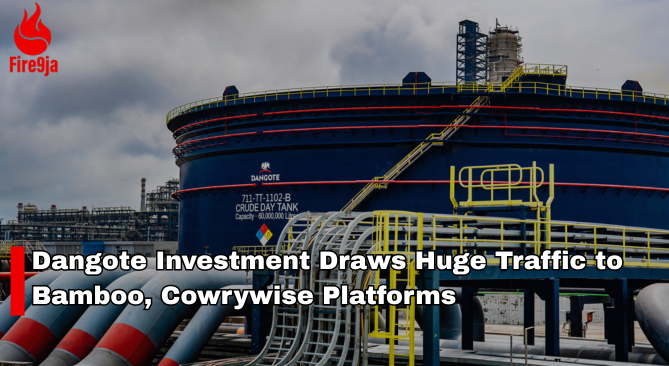
It can be reported that following Aliko Dangote’s investment opportunity, some investment platforms are experiencing huge traffic, causing their platforms to become slow and go down.
Two platforms openly announced their issues. Bamboo said “Hey everyone, we’re getting a much higher than expected traffic trying to get into the Dangote IPO and it’s making it difficult for some users to log into the Bamboo app. We’re working on a fix and it will be up and running shortly.”
Cowrywise also said “We’re currently seeing more traffic than usual on the Cowrywise app. Our team is already on it and working to get things back to normal. Thanks for your patience, everyone.”

Gallery: Some of the Fits Spotted at Milan Fashion Week

Barack Obama Says Things Could Be Better With Women in Charge

Dove Cameron and Damiano David Tie the Knot in Tuscany


-
 Fashion6 hours ago
Gallery: Some of the Fits Spotted at Milan Fashion Week
-

 Politics10 hours ago
Anambra Commissioner Law Mefor Speaks on Peter Obi and Soludo
-

 Fashion10 hours ago
Gallery: Beverly Naya in Different Styles & Vibes
-

 Entertainment8 hours ago
Omowunmi Dada Opens Up About Ending Relationship Over Religious Differences
-
 Health10 hours ago
The Rise of Fake Products in Nigeria: How Safe Are We?
-
 News7 hours ago
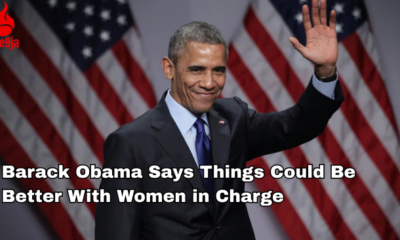
Barack Obama Says Things Could Be Better With Women in Charge
-

 Entertainment9 hours ago
Actor Olaide Olabanji Shows Support for Peter Obi For Upcoming Election
-

 Sport11 hours ago
Lamine Yamal Says Pau Cubarsí Deserves Ballon d’Or Recognition