
Business
Dangote Refinery Begins Loading Locally Produced Petrol

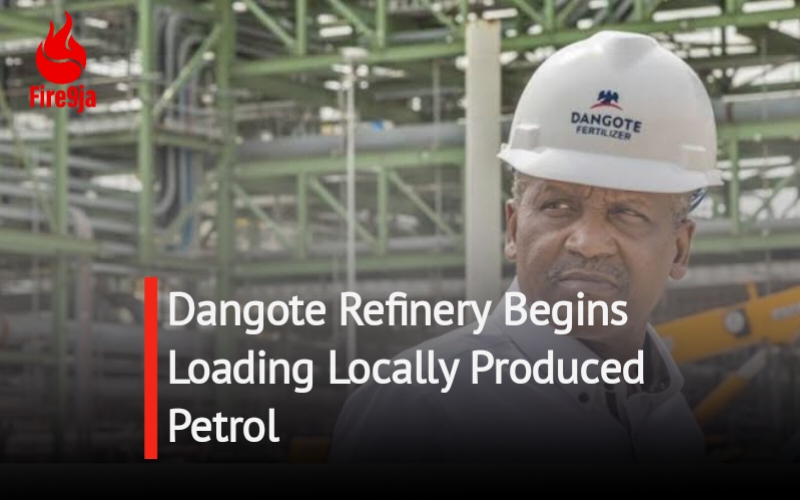
The Dangote Refinery has marked a significant milestone as the first batch of trucks has begun loading Premium Motor Spirit (PMS), commonly known as petrol, at the facility.
This development was highlighted in a video shared by the Dangote Group on its official X account, where the company confirmed the commencement of fuel loading.
In the video, the company announced that the trucks are ready to load PMS, signaling a major step toward locally produced petrol being distributed across Nigeria.
The Nigerian National Petroleum Company Limited (NNPCL) had previously confirmed the arrival of over 300 trucks at the Dangote Refinery, prepared to load petrol and begin distribution nationwide.
This marks a historic moment for Nigeria, as it is the first time in several years that the country will be loading and distributing locally refined petrol.
The significance of this achievement goes beyond mere fuel distribution.
It could have far-reaching effects on the nation’s economy, potentially reducing the cost of fuel and curbing long-standing issues of fuel scarcity that have plagued Nigerians.
Finance Minister Wale Edun, alongside Federal Inland Revenue Service Chairman Zacch Adedeji, had earlier confirmed that all necessary agreements were in place for NNPCL to begin lifting petrol from the Dangote Refinery.
Industry stakeholders and petroleum marketers are optimistic that the launch of fuel distribution from the refinery will not only address the recurring problem of fuel shortages but may also lead to a gradual reduction in petrol prices.
This development promises to be a significant leap toward achieving energy independence in Nigeria and fostering more stability in the nation’s fuel market.















Bitcoin has fallen below $63,000, reaching its lowest level since October 2024 amid weakening investor confidence and increased volatility in the cryptocurrency market.
According to CoinMarketCap data, Bitcoin dropped 13.9 per cent to $62,965 as of 10:20 p.m. on Thursday. The decline comes after months of downward movement, with the cryptocurrency now more than 45 per cent below its October peak.
Ethereum also recorded a sharp decline, falling 13 per cent to $1,863, while the global cryptocurrency market capitalisation dropped to $2.19 trillion.
Analysts reportedly linked the latest decline to a broader sell-off in US technology stocks, which has also affected other risk assets. Bitcoin had reached an all-time high of more than $125,000 on October 5 before falling sharply in the days that followed, highlighting the continued volatility in the crypto market.
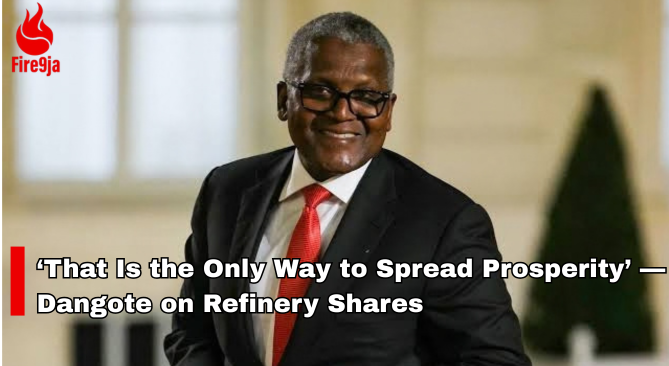
Businessman Aliko Dangote has explained why he believes Nigerians should participate in the ownership of his refinery by purchasing shares.
He was asked by singer Davido why Nigerians should participate, and Dangote explained that the initiative would help spread wealth and prosperity across Africa.
“Well, it’s very important because that is the only way to spread prosperity and wealth throughout Africa. And like I said, this is not going to be the first and the last. We will continue with even our fertilizer. By the time we finish listing, every single one will own part of our businesses and we will create a pool of cash…”
He explained that the goal is to create opportunities for more Nigerians to own a stake in the businesses and help spread wealth across the country.

Aliko Dangote speaks on his lineage and addresses not having a son as he was asked about not having a son to carry his name and achievements.
“That is not my priority because God controls everything. You can pray for God to give you a son, but he might be the one to take down the name of the family.”
Instead, he shared that he does not mind not having a son. “I don’t think a son would have done better than the three daughters I have.”
Aside from that, he was also asked about giving advice to young Nigerians. “Work hard, be consistent, focused and know what you want to do.”

Walid Acherchour Backs Lamine Yamal to Win 2026 Ballon d’Or

Zlatan Announces Wedding Date With Longtime Partner Davita

11 New K-Dramas To Add To Your Watch-list This October 2026


-

 Entertainment7 hours ago
Bridgerton Announces Violet and Edmund Love Story Spin-Off
-

 Entertainment7 hours ago
Mr Eazi Sparks Reactions With Comment About Expecting Twins
-

 Entertainment7 hours ago
From Men in Black to Aladdin: 10 Will Smith Movies
-
 Entertainment7 hours ago
11 New K-Dramas To Add To Your Watch-list This October 2026
-

 Entertainment7 hours ago
10 Global Music Stars Who Became Famous At A Young Age
-
 Sport7 hours ago
Walid Acherchour Backs Lamine Yamal to Win 2026 Ballon d’Or
-
 Entertainment7 hours ago
Zlatan Announces Wedding Date With Longtime Partner Davita