
News
Everything You Need to Know About the Bloodshed in Benue


The people of Benue State, Nigeria, are going through something painful—again. Just days ago, fresh violence erupted in Guma Local Government Area, leaving entire families wiped out. The community of Yelewata was hit hard. It was an attack that came at night, catching many in their sleep. Over 100 people lost their lives, some reports say even more. Houses were set on fire. Women, children, and the elderly were among the victims.
People who survived this horror describe it as something they’ll never forget. The attackers came heavily armed, surrounding homes and opening fire before setting buildings on fire. Some of the victims had run to the market thinking it would be safer, but they were also found and killed. This kind of tragedy has become far too common in Benue. And each time it happens, the pain spreads—not just in the community, but across the entire state.
Why Benue Keeps Facing These Attacks
At the heart of this problem is a long-standing struggle between farmers and herders. Benue is known for farming. It grows much of Nigeria’s food—things like rice, yams, and vegetables. But over time, as herders (especially Fulani herdsmen) move further into the state looking for grass and water for their cattle, tensions rise. The farmers say the herdsmen destroy their crops. The herders say they’re just trying to survive.
This fight over land and resources has turned deadly. There are laws in place—like the 2017 anti-open grazing law in Benue—but enforcing them has been difficult. And when cattle are seized or herders are arrested, it often leads to revenge attacks like the one in Yelewata.

These killings have been happening for years now.
In 2022, there were reports of attacks that killed more than 20 people in Guma. In 2023 and 2024, entire schools were shut down or burnt down because of rising violence. Thousands of people lost their homes, farms, and family members. Some had to live in temporary camps with little to no help.
Earlier this year in March 2025, more people were killed in different villages in Benue. The violence isn’t slowing down—it’s spreading. And now, nearly every part of the state lives in fear of the next attack. Right now, Benue has a huge number of displaced people. Some say over 500,000 are living in camps or makeshift shelters. These are people who can’t go back home because their homes have been destroyed or they’re too scared to return.
Food is another major problem. With farms abandoned, food is becoming scarce. Children are out of school, many have lost parents, and families are struggling to survive. Every new attack makes things worse. There’s also the cost—people have lost money, land, businesses, and any sense of safety. And when farmers can’t farm, the rest of the country also feels the pain. Food prices go up, and hunger spreads.
What the Government Is Saying
After the latest killings, the Nigerian Senate asked for immediate action. They want security forces to be sent to rural areas. They also asked for better tracking of illegal weapons and more support for the idea of creating ranches for herders, so their cattle don’t have to roam into people’s farms.
President Bola Tinubu also spoke up. He condemned the killings and promised to bring those responsible to justice. But for people on the ground, promises are not enough. They need results. They want real safety. They want to sleep at night without fearing gunshots.

What Can Be Done?
If Benue is going to find peace, a few things have to change:
- The anti-open grazing law must be enforced properly, not just on paper.
- The government needs to invest in proper ranches so herders don’t keep moving around with their cattle.
- Communities need help building back—homes, farms, and schools.
- There should be serious efforts to talk to both sides and find common ground.
- Armed groups must be stopped, and those responsible for killings must be punished.
Why This Matters for Everyone
This isn’t just about Benue. When a state that grows a large part of Nigeria’s food is in crisis, the whole country suffers. If the violence continues, there will be less food, more hunger, more people displaced, and more anger. It could even lead to more division along ethnic and religious lines.














The Academic Staff Union of Universities (ASUU) has reportedly declared a strike at Taraba State University over outstanding salary-related demands and delays in payments.
The strike is scheduled to begin today, October 12, 2026. According to the union’s chairman, the union had been engaging the Taraba State Government over its outstanding demands since February 2026.
“The union had exercised considerable patience and demonstrated its commitment to dialogue since February 2026, when it began engaging the Taraba State Government over the outstanding issues,” Mbave said.
“The union had earlier suspended its planned industrial action following an appeal by the government for additional time through the Office of the Head of Civil Service, in the interest of maintaining industrial harmony,” the chairman added.
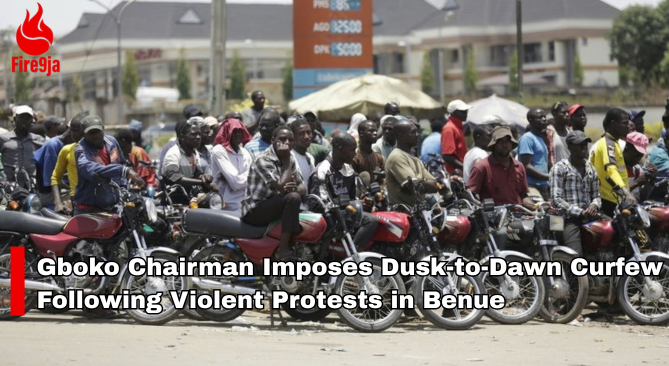
The Chairman of Gboko Local Government Area of Benue State, Torseer Yina, has imposed a dusk-to-dawn curfew in the ancient town.
The curfew takes effect from Thursday, October 8, 2026, following unrest and violent protests in the area.
According to reports, the action was taken to contain the unrest and violent protests by members of BEMOA following the death of one of its members by unknown gunmen.
The protest, which was reportedly hijacked by hoodlums, turned violent after an angry mob burnt two vehicles belonging to the Benue State Civil Protection Guards.
The Gboko council chairman said the curfew takes effect immediately and warned that anyone caught flouting the order or breaching public peace would be decisively dealt with.
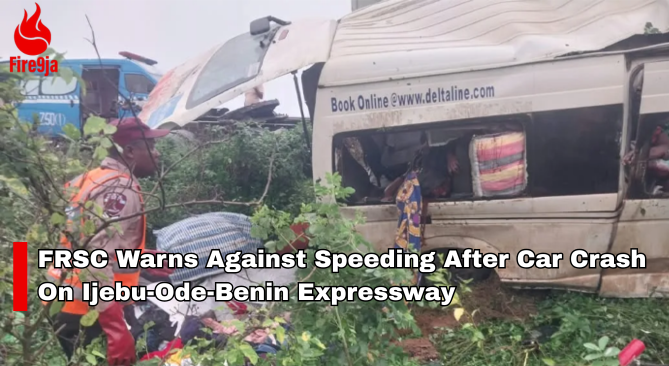
Nine people have died in a fatal road crash along the Ijebu-Ode-Benin Expressway in Ogun State.
The crash occurred on Monday at about 4:55pm around the Bethel area along the Ijebu-Ode/Ore axis of the expressway. It involved a white Toyota Hiace commercial bus belonging to Delta Line and a white Sino truck operated by Bill Gas Solution Ltd.
According to the Federal Road Safety Corps (FRSC), all nine people involved in the crash, comprising three males and six females, died in the incident.
The FRSC said the crash occurred while it was raining and the road was wet, with preliminary investigations identifying speed violation as the probable cause.
The FRSC rescue team arrived at the scene shortly after receiving the report, while the bodies of the victims were taken to the General Hospital Morgue in Ijebu-Ode.
The Ogun State Sector Commander, Oludare Ogunjobi, urged motorists, especially commercial drivers, to obey speed limits and exercise extra caution when driving in the rain.

Judge Tells Duane Davis He Must Face Justice for Tupac’s Murder

Timini Egbuson Reflects on Embracing YouTube Movies in Nollywood


