
News
Minister Urges NNPCL to Abandon State Refineries and Invest in Dangote

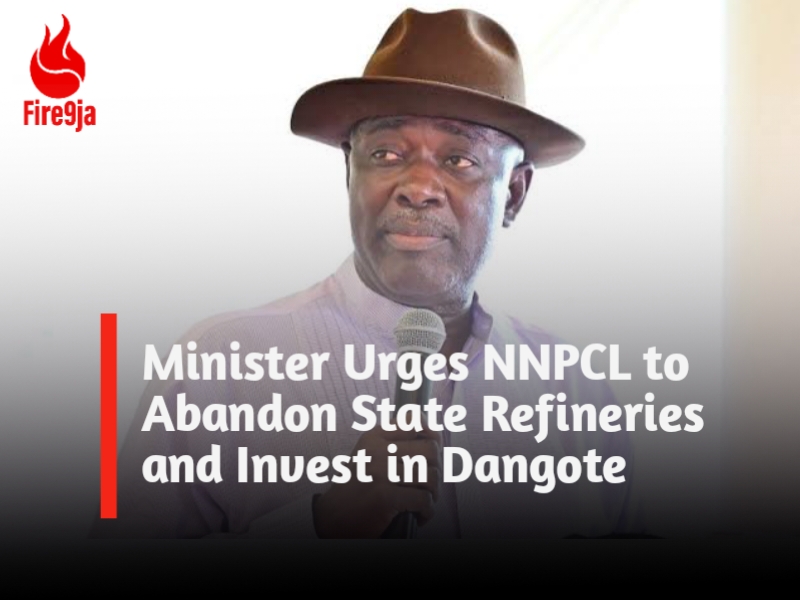
Minister of State for Petroleum Resources (Oil), Heineken Lokpobiri, has called on the Nigerian National Petroleum Company Limited (NNPCL) to cease operations at Nigeria’s struggling Port Harcourt, Kaduna, and Warri refineries.
He urged the company to instead shift focus toward acquiring a larger equity stake in the Dangote Refinery, a private sector-driven enterprise that is already making significant strides in boosting the country’s petroleum refining capacity.
Lokpobiri’s recommendation was made public during his speech at the ongoing Crude Oil Refinery Owners Association of Nigeria Summit in Lagos.
In his address, Lokpobiri, represented by Dangana Tende, Deputy Director of Upstream at the Ministry of Petroleum Resources, stressed that the government is committed to fully implementing deregulation in the downstream sector of the oil industry.
He emphasized that NNPCL’s future should be tied to investment in private refineries, such as the Dangote Refinery, rather than operating outdated state-run refineries that have continuously failed to meet expectations.
He noted that “we urge the state oil company to take equity in the other upcoming refineries rather than focus on running state-owned ones.
The government will ensure that downstream deregulation is implemented 100 percent.”
This bold statement comes at a time when Nigeria’s four major refineries – Port Harcourt, Kaduna, and Warri – have remained non-functional for nearly 24 years, despite significant financial injections for turnaround maintenance.
These facilities, with a combined capacity of 445,000 barrels per day, have yet to produce any substantial output in decades, making Nigeria reliant on imports for refined petroleum products.
Over the years, the NNPCL has repeatedly made promises to bring the Port Harcourt Refinery back online, setting several deadlines for the production of petroleum products.
However, none of these targets have been met, and the refinery continues to drain resources without delivering results.
This situation has heightened the need for a shift in strategy, which Lokpobiri has firmly advocated for.
Meanwhile, the Dangote Refinery has emerged as a game-changer for Nigeria’s oil industry.
With a refining capacity of 650,000 barrels per day, the facility began distributing Premium Motor Spirit (petrol) on September 15, 2024, with NNPCL acting as the sole off-taker.
This move is expected to significantly reduce Nigeria’s dependence on imported fuel and stabilize the local market.
Currently, NNPCL holds only a 7.2 percent stake in the Dangote Refinery, a figure that Lokpobiri believes should be increased to reflect the government’s commitment to supporting private initiatives that contribute to national energy security.
He highlighted that investing more in the Dangote Refinery and other private refineries would be more beneficial for Nigeria’s future than continuing to pump resources into moribund state-run facilities.
The call to abandon the state-owned refineries has sparked conversations about the future of Nigeria’s oil industry, especially as the country moves towards full deregulation of the downstream sector.
Lokpobiri’s recommendation underscores the government’s intention to foster a competitive and efficient oil sector driven by private enterprise, as well as its determination to end the era of wasteful spending on refineries that offer little return on investment.






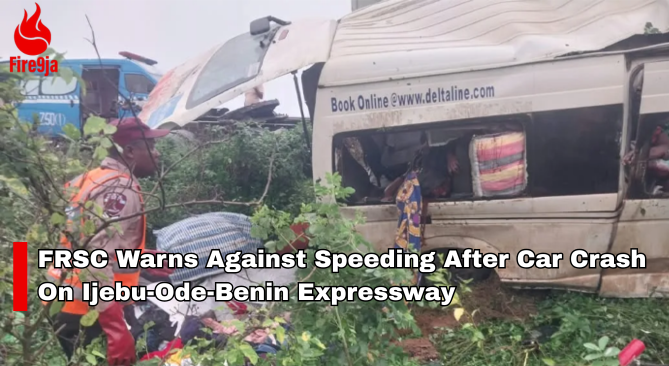
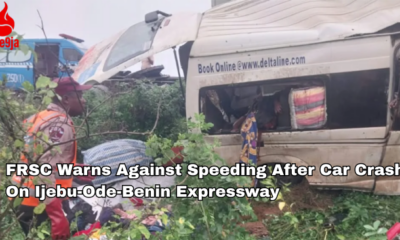
Nine people have died in a fatal road crash along the Ijebu-Ode-Benin Expressway in Ogun State.
The crash occurred on Monday at about 4:55pm around the Bethel area along the Ijebu-Ode/Ore axis of the expressway. It involved a white Toyota Hiace commercial bus belonging to Delta Line and a white Sino truck operated by Bill Gas Solution Ltd.
According to the Federal Road Safety Corps (FRSC), all nine people involved in the crash, comprising three males and six females, died in the incident.
The FRSC said the crash occurred while it was raining and the road was wet, with preliminary investigations identifying speed violation as the probable cause.
The FRSC rescue team arrived at the scene shortly after receiving the report, while the bodies of the victims were taken to the General Hospital Morgue in Ijebu-Ode.
The Ogun State Sector Commander, Oludare Ogunjobi, urged motorists, especially commercial drivers, to obey speed limits and exercise extra caution when driving in the rain.
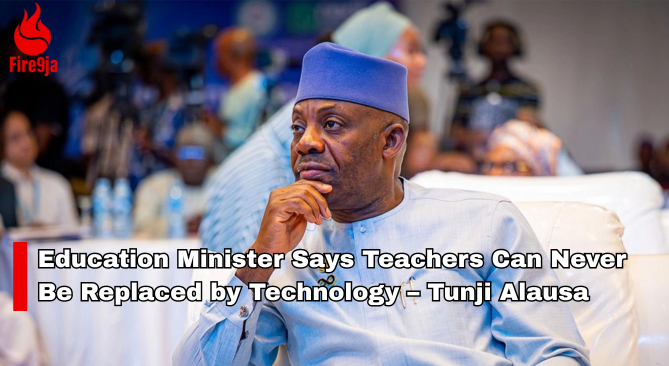
Minister of Education, Dr Tunji Alausa, speaks on the role and importance of teachers in the world to celebrate Teachers’ Day today.
He spoke on technology and its advancement and shared that while it is going well, teachers can never be replaced.
“These tools can help teachers reach learners and tailor instruction, but the judgement, encouragement and human connection of a skilled teacher remain indispensable,” he said.
“Every doctor, engineer, scientist, entrepreneur and public servant has benefited from a teacher and could not have become what they are today without teachers,” the minister said.
“When we honour teachers, we honour the people who make every other profession possible.”
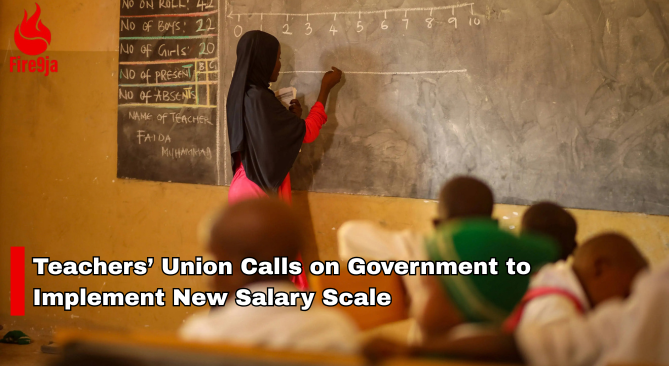
The National Union of Teachers calls on the government to review the salary of teachers in secondary schools.
It was shared “Teachers must receive remuneration that reflects the importance of their responsibilities and the prevailing economic realities in the country. We wish to recall that the Federal Government, under former President Muhammadu Buhari, gave approval for the implementation of a special salary scale for teachers in basic and secondary schools in the year 2022 alongside other welfare packages.
“Unfortunately, four years after the approvals, implementation has not commenced.
“We, therefore, renew our call on the government to set machinery in motion for actualisation of the new salary regime for teachers in order to boost their morale and enhance their dignity.”

Nigerian-Made Lagos Life Game Takes Social Media by Storm

Actor Laide Olabanji Throws Support Behind Peter Obi Ahead of 2027

Speed Darlington Sparks Reactions With Comments About Igbo Women


-
 Entertainment12 hours ago
Pastor Bolaji Idowu Speaks on Struggles in Modern Relationships
-
 News16 hours ago
FRSC Warns Against Speeding After Car Crash On Ijebu-Ode-Benin Expressway
-

 Sport13 hours ago
Cristiano Ronaldo’s Portugal Future Remains Uncertain After Squad Exit
-
 Entertainment16 hours ago
VDM Declares Support for Blessing CEO After Recent Discoveries
-

 Tech15 hours ago
How to Prompt AI to Change Your Outfit in a Photo
-
 Entertainment11 hours ago
Actor Laide Olabanji Throws Support Behind Peter Obi Ahead of 2027
-
 Entertainment10 hours ago
Nigerian-Made Lagos Life Game Takes Social Media by Storm
-
 Entertainment11 hours ago
Speed Darlington Sparks Reactions With Comments About Igbo Women