
Business
NANS Urges Government to Cut Education Costs Instead of Offering Student Loans

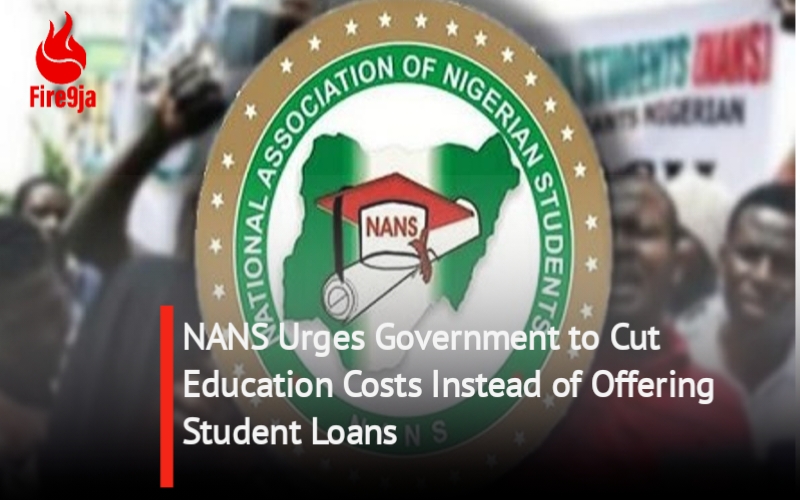
The National Association of Nigerian Students (NANS) has called on the Federal Government to focus on reducing the high cost of education rather than relying on the student loan scheme recently introduced.
NANS Senate President, Henry Okuomo, voiced this concern during an interview on Sunrise Daily, a program on Channels Television, on Friday.
Okuomo emphasized that cutting the cost of education would have a more meaningful and lasting impact on Nigerian students compared to offering loans, especially considering the country’s high unemployment rate, which may make it difficult for students to repay these loans in the future.
“For now, the process of accessing these loans is unclear. We don’t know the criteria, who the beneficiaries are, or how students can apply.
We have heard from many students who have attempted to get the loans but were unsuccessful,” Okuomo explained.
He also noted that efforts to engage with NELFUND, the body responsible for administering the loans, have so far been met with no concrete response.
Rather than offering loans with uncertain repayment options, Okuomo proposed a more effective solution: drastically reducing the cost of education at tertiary institutions.
He suggested that fees be lowered to a more affordable range, between N20,000 and N50,000, making higher education accessible to a broader segment of society.
“If education is affordable, more students will be able to attend without needing loans. Even with the loan scheme, we still don’t fully understand the repayment terms.
With many graduates unable to find jobs, how can they be expected to pay back these loans?” he questioned.
The student loan scheme, introduced by President Bola Tinubu as a key part of his administration’s education reform, was designed to support students from low-income families in paying their tuition fees at Nigerian universities and other higher institutions.
This initiative was formalized through the signing of the Access to Higher Education Act, which created the legal framework for granting financial aid to indigent students.
Despite this, NANS argues that the initiative, while well-intentioned, does not address the core issue facing Nigerian students—skyrocketing tuition fees.
Reducing the cost of education, according to Okuomo, would not only lessen the financial burden on students but also eliminate the risk of students being saddled with debt they may struggle to repay due to Nigeria’s challenging job market.
Okuomo’s remarks have reignited the conversation around affordable education in Nigeria, sparking debate about the best way to provide relief for students without further complicating their financial futures.











Bitcoin has fallen below $63,000, reaching its lowest level since October 2024 amid weakening investor confidence and increased volatility in the cryptocurrency market.
According to CoinMarketCap data, Bitcoin dropped 13.9 per cent to $62,965 as of 10:20 p.m. on Thursday. The decline comes after months of downward movement, with the cryptocurrency now more than 45 per cent below its October peak.
Ethereum also recorded a sharp decline, falling 13 per cent to $1,863, while the global cryptocurrency market capitalisation dropped to $2.19 trillion.
Analysts reportedly linked the latest decline to a broader sell-off in US technology stocks, which has also affected other risk assets. Bitcoin had reached an all-time high of more than $125,000 on October 5 before falling sharply in the days that followed, highlighting the continued volatility in the crypto market.
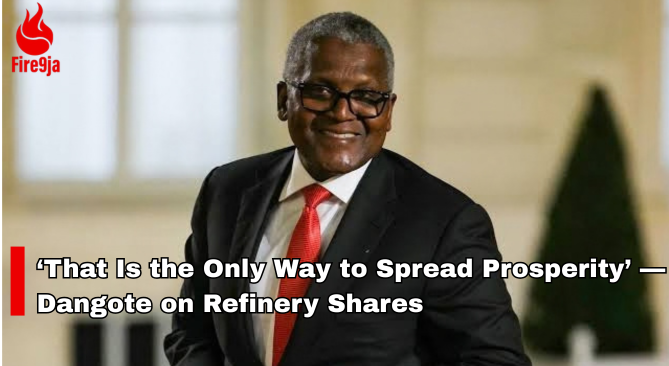
Businessman Aliko Dangote has explained why he believes Nigerians should participate in the ownership of his refinery by purchasing shares.
He was asked by singer Davido why Nigerians should participate, and Dangote explained that the initiative would help spread wealth and prosperity across Africa.
“Well, it’s very important because that is the only way to spread prosperity and wealth throughout Africa. And like I said, this is not going to be the first and the last. We will continue with even our fertilizer. By the time we finish listing, every single one will own part of our businesses and we will create a pool of cash…”
He explained that the goal is to create opportunities for more Nigerians to own a stake in the businesses and help spread wealth across the country.

Aliko Dangote speaks on his lineage and addresses not having a son as he was asked about not having a son to carry his name and achievements.
“That is not my priority because God controls everything. You can pray for God to give you a son, but he might be the one to take down the name of the family.”
Instead, he shared that he does not mind not having a son. “I don’t think a son would have done better than the three daughters I have.”
Aside from that, he was also asked about giving advice to young Nigerians. “Work hard, be consistent, focused and know what you want to do.”

Judge Tells Duane Davis He Must Face Justice for Tupac’s Murder

Timini Egbuson Reflects on Embracing YouTube Movies in Nollywood


