
News
Nigeria 2024: Key Moments That Shaped Nigeria Economically and Politically


As 2024 draws to a close, it’s an opportune moment to reflect on the events that have significantly influenced Nigeria throughout the year.
From political shifts to economic developments and social challenges, this year has been marked by pivotal moments that have shaped the nation.
Political Landscape and Governance

The year commenced with the Ibadan explosion in January, which brought national attention to urban safety and regulation.
This incident showed the critical need for stringent safety measures in densely populated areas.
In the same month, the Ondo and Edo governorship elections were held, with the ruling party securing victories.
In April, a significant development occurred when a schoolgirl abducted during the Chibok kidnapping in 2014 was rescued in Gwoza, Borno State, along with her three children.
Economic Developments
In December, Shell received approval from Nigeria’s oil minister for the sale of $2.4 billion worth of onshore and shallow-water assets to Renaissance Group.
This was Shell’s exit from nearly a century of onshore operations in Nigeria and was part of a larger withdrawal by Western energy companies, including Exxon Mobil, Eni, and Equinor.
The sale faced a block in October by the Nigerian Upstream Petroleum Regulatory Commission (NUPRC) due to concerns about Renaissance’s capacity to manage the assets, which are estimated to hold 6.73 billion barrels of oil and 56.27 trillion cubic feet of gas.
Social Challenges and Public Safety
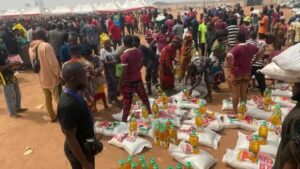
Tragically, in December, at least 13 people, including four children, died in two separate stampede incidents at Christmas charity events in Abuja and Anambra state.
These incidents occurred as large crowds gathered to receive food and clothing items during a severe cost of living.
There has also been a reoccurring incident of the National Grid collapse. The incident has caused blackouts in regions during the time of its collapse.
Security and Conflict
Throughout the year, Nigeria faced persistent security challenges.
In June, a strike by the Nigerian Labour Congress and the Trade Union Congress disrupted operations at Abuja and Lagos airports and caused nationwide power outages.
Additionally, the conflict with Boko Haram continued, with incidents such as the attack on a convoy in Shiroro, Niger State, in November, resulting in casualties among security forces.
Sports and International Relations
In February, Nigeria’s national football team faced a setback by losing 2–1 against Ivory Coast in the 2023 Africa Cup of Nations final held in Abidjan.
This loss was a disappointment for fans and showed areas for improvement in the national team’s performance.
The year 2024 has been a period of significant events for Nigeria, which encompasses political shifts, economic changes, social challenges, and security concerns.
As the nation moves forward, these events will undoubtedly influence its development and the well-being of its citizens.











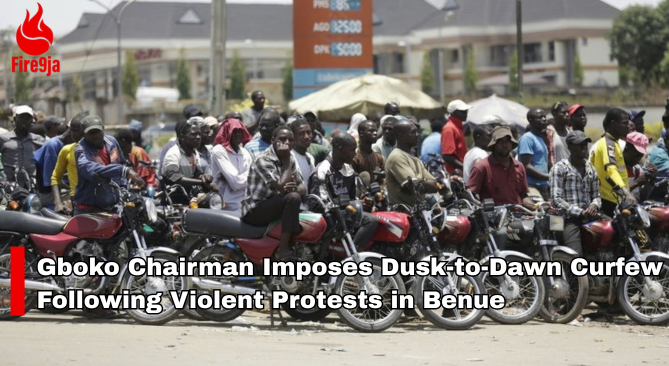
The Chairman of Gboko Local Government Area of Benue State, Torseer Yina, has imposed a dusk-to-dawn curfew in the ancient town.
The curfew takes effect from Thursday, October 8, 2026, following unrest and violent protests in the area.
According to reports, the action was taken to contain the unrest and violent protests by members of BEMOA following the death of one of its members by unknown gunmen.
The protest, which was reportedly hijacked by hoodlums, turned violent after an angry mob burnt two vehicles belonging to the Benue State Civil Protection Guards.
The Gboko council chairman said the curfew takes effect immediately and warned that anyone caught flouting the order or breaching public peace would be decisively dealt with.
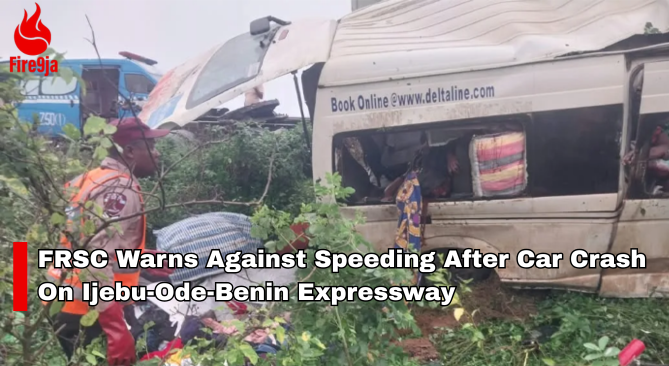
Nine people have died in a fatal road crash along the Ijebu-Ode-Benin Expressway in Ogun State.
The crash occurred on Monday at about 4:55pm around the Bethel area along the Ijebu-Ode/Ore axis of the expressway. It involved a white Toyota Hiace commercial bus belonging to Delta Line and a white Sino truck operated by Bill Gas Solution Ltd.
According to the Federal Road Safety Corps (FRSC), all nine people involved in the crash, comprising three males and six females, died in the incident.
The FRSC said the crash occurred while it was raining and the road was wet, with preliminary investigations identifying speed violation as the probable cause.
The FRSC rescue team arrived at the scene shortly after receiving the report, while the bodies of the victims were taken to the General Hospital Morgue in Ijebu-Ode.
The Ogun State Sector Commander, Oludare Ogunjobi, urged motorists, especially commercial drivers, to obey speed limits and exercise extra caution when driving in the rain.
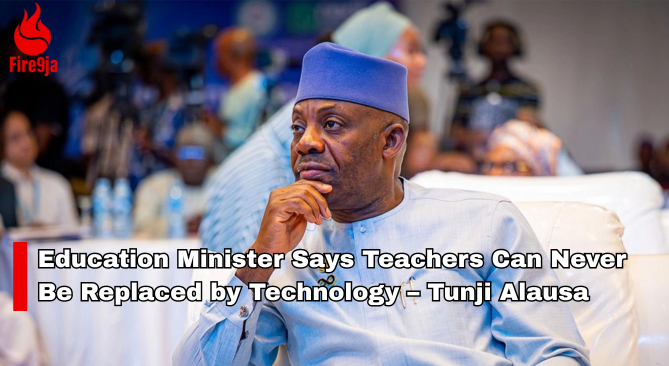
Minister of Education, Dr Tunji Alausa, speaks on the role and importance of teachers in the world to celebrate Teachers’ Day today.
He spoke on technology and its advancement and shared that while it is going well, teachers can never be replaced.
“These tools can help teachers reach learners and tailor instruction, but the judgement, encouragement and human connection of a skilled teacher remain indispensable,” he said.
“Every doctor, engineer, scientist, entrepreneur and public servant has benefited from a teacher and could not have become what they are today without teachers,” the minister said.
“When we honour teachers, we honour the people who make every other profession possible.”

Walid Acherchour Backs Lamine Yamal to Win 2026 Ballon d’Or

Zlatan Announces Wedding Date With Longtime Partner Davita

11 New K-Dramas To Add To Your Watch-list This October 2026


-

 Entertainment16 hours ago
Bridgerton Announces Violet and Edmund Love Story Spin-Off
-

 Entertainment16 hours ago
Mr Eazi Sparks Reactions With Comment About Expecting Twins
-
 Entertainment16 hours ago
From Men in Black to Aladdin: 10 Will Smith Movies
-

 Entertainment16 hours ago
10 Global Music Stars Who Became Famous At A Young Age
-
 Entertainment16 hours ago
11 New K-Dramas To Add To Your Watch-list This October 2026
-
 Sport16 hours ago
Walid Acherchour Backs Lamine Yamal to Win 2026 Ballon d’Or
-
 Entertainment16 hours ago
Zlatan Announces Wedding Date With Longtime Partner Davita