
Entertainment
Nigerian Man Discusses Davido’s Custody Battle with Sophia Momodu


Okey Aliyu, a Nigerian man, recently shared his views on Davido’s legal action against Sophia Momodu regarding their daughter, Imade. Aliyu believes that Davido might face challenges in gaining joint custody due to traditional Igbo customs.
According to Aliyu, in Igbo culture, children born before the payment of bride price are typically considered to belong to the mother’s family. He explained that without the formalities of paying the bride price and marriage, the child legally belongs to the mother.
This cultural aspect, Aliyu suggests, could impact Davido’s custody case, emphasizing that Davido’s failure to meet these traditional requirements before Imade’s birth may hinder his chances in court.
“I love the Igbo culture so much. If you impregnate a lady as a guy in most Igbo part of this country without paying her bride price, you already know the child belongs to the girl’s family and not yours as the guy,” he wrote.
“Let me rephrase; I hope you know in Igbo land, if you impregnate a lady and she gives birth without you paying her bride price, even if you later marry her, the child she gave birth to before you paid her bride price isn’t yours. hope you know?
“We start counting your legitimate children from the ones she birthed after you paid her bride price. Except her parents wants to pity you by giving you the child. By right, it’s not your child.
“I said let me notify you incase you don’t know how the culture works
“I always laugh whenever I see people fighting over custody of children they didn’t pay any kobo on the lady that birthed the child as bride price. Culture dey Sha
“If na my side you kon drag Pikin wey you no pay bride price for the girl head ehhh, your front teeth for don loss. Yes, you can’t win anywhere no matter your money and connection…” the man said part.





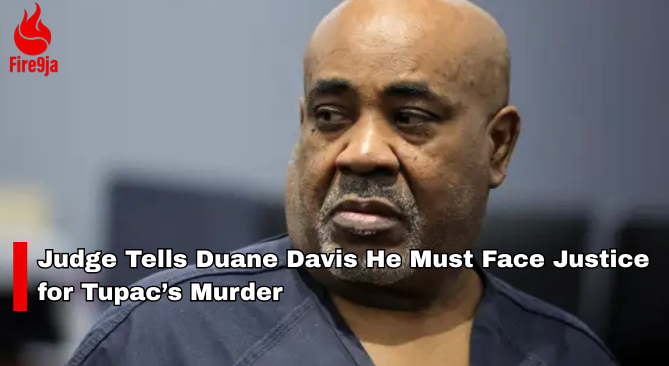
The long-awaited trial in the murder case of legendary rapper Tupac Shakur has reached a major development, with Duane “Keffe D” Davis sentenced to 40 years to life in prison on October 13, 2026.
Davis was convicted of first-degree murder in August 2026 for his role in orchestrating the 1996 killing. Tupac was shot in a drive-by attack in Las Vegas on September 7, 1996, and died six days later.
During the sentencing, the judge addressed Davis, rejecting his claims that he had changed his life and moved on from his past. “Mr. Davis, for three years, I’ve heard you say some variation of the same thing to law enforcement, [in interviews], in your book, and it’s something like, ‘Yeah, I was involved in this, but I’m different. I’ve moved on. I got out of Compton. I’m a grandfather now.’ I’m here to tell you that’s not how this works,” the judge said.
She continued “You don’t get to take a man from his family. You don’t get to take his very life, his whole future from him, and just walk away from it. Especially when that man is Tupac Shakur.
“The world never forgot about him and his death, and neither did Las Vegas. It took us 30 years, but at this time, you are going to face justice for what you did on Sept. 7, 1996.”

Nollywood actor Timini Egbuson has reflected on how his perception of YouTube movies has changed over the years. The actor recalled that there was a time when he looked down on movies released on YouTube.
However, he now appreciates the opportunities they have provided for his career and joked that he might have struggled financially if he had continued to dismiss them.
Sharing his thoughts in a post on X, Egbuson wrote “Can’t believe I was looking down on YouTube movies at some point. Hunger go don kpai me by now.”
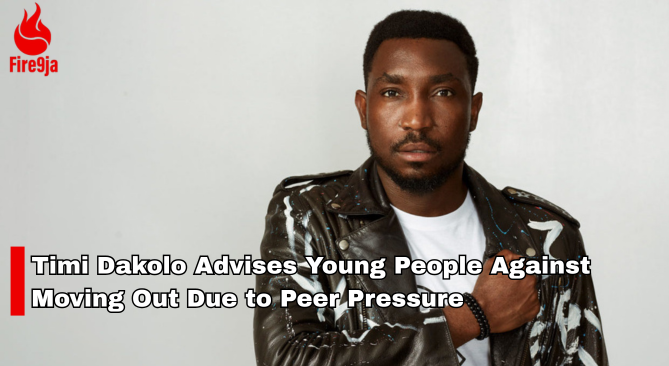
Nigerian singer Timi Dakolo has advised young people who are still living with their parents not to rush into moving out because of peer pressure.
The singer encouraged young people to focus on their personal circumstances rather than compare their lives with those of others. He noted that there is no need to leave their parents’ homes simply because they want to feel independent.
Sharing his advice, Dakolo said “No hurry, leave your papa house because of peer pressure. Forget all that, ‘I don’t have my freedom here.’”

Judge Tells Duane Davis He Must Face Justice for Tupac’s Murder

Timini Egbuson Reflects on Embracing YouTube Movies in Nollywood


