
News
Peter Obi Blasts Power Failures and Urges Leadership to Fix Nigeria’s Grid Crisis

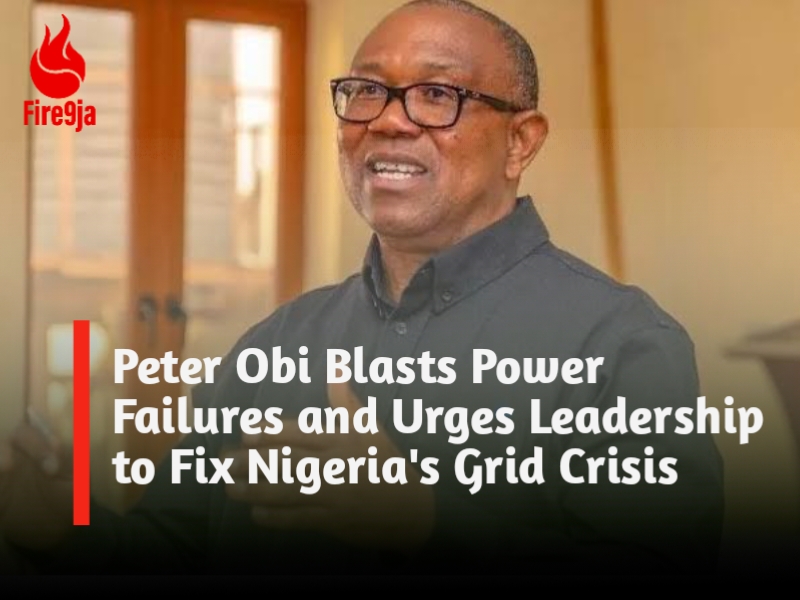
Peter Obi, former governor of Anambra State and 2023 presidential candidate, has voiced his concerns about the recent collapse of Nigeria’s national grid.
In a scathing statement, Obi called the recurring grid failures a “national shame” and a clear sign of failed leadership.
For years, Nigerians have endured a power system that is unreliable, contributing to the slow growth of the economy and the hardships of daily life.
Obi highlighted that Nigeria’s power infrastructure, which produces less than 10,000 megawatts of electricity, pales in comparison to other African nations.
South Africa, which now holds the title of the largest economy on the continent with a GDP of about $400 billion, generates over 40,000 megawatts, despite having just 30% of Nigeria’s population.
Egypt, the second-largest economy with a GDP of about $350 billion, also generates more than 40,000 megawatts.
Even Algeria, with a GDP of $300 billion and only 20% of Nigeria’s population, surpasses Nigeria in electricity generation, producing over 50,000 megawatts.
This wide disparity in power generation, Obi argues, is not just about infrastructure.
It reflects a larger issue of poor governance and lack of vision by Nigeria’s leadership over the years.
He pointed out that the power crisis, among other factors, has caused Nigeria to drop from being the largest economy in Africa to the fourth, a sharp fall from its potential.
Obi’s comments come after yet another collapse of the national grid, plunging large parts of the country into darkness.
It’s a recurring problem that has persisted for decades, one that experts and citizens alike have described as frustrating and debilitating for the economy.
The frequent collapses expose the fragility of Nigeria’s electricity infrastructure and leave millions of small businesses and industries struggling to cope.
Obi mentioned how critical power is to small and medium enterprises (SMEs), which he described as the engine of job creation in Nigeria.
He noted that these SMEs are major contributors to the nation’s GDP, and without reliable electricity, their growth is stunted.
Obi’s message also touched on the broader failures of Nigeria’s leadership. He emphasized that for years, Nigerian governments have failed to prioritize the needs of the people.
The absence of consistent power supply is just one symptom of a governance deficit that affects many areas of development.
Obi stressed the need for urgent reforms, urging Nigerians to demand better governance.
In recent years, the country has faced numerous challenges, including high inflation, an unstable exchange rate, rising insecurity, and declining foreign investment.
The power crisis has only worsened these issues. Critics argue that successive governments, including the current administration led by President Bola Tinubu (Tpain), have not done enough to fix the broken system.
Despite promises and reforms, there has been little progress in improving electricity supply.
As South Africa, Egypt, and Algeria continue to outpace Nigeria in electricity generation, it raises questions about Nigeria’s leadership and policy direction.
Obi urged for a new approach that prioritizes measurable outcomes, such as power generation, education, and healthcare, rather than empty rhetoric.
He called for “urgent, comprehensive reform” to tackle the root causes of the problem and move Nigeria toward sustainable development.
In his closing remarks, Peter Obi expressed his belief that a new Nigeria is possible.
He has consistently championed good governance, transparency, and accountability as the foundation for national growth.
His vision for Nigeria, which he shared during his presidential campaign, remains centered on creating a country where every citizen can access the resources and opportunities needed to thrive.
As the conversation around Nigeria’s power crisis continues, many Nigerians hope for a lasting solution that will end the constant blackouts and put the country back on the path to economic growth.
Obi’s statement echoes the frustrations of millions of Nigerians who want a government that truly works for the people, prioritizes their well-being, and addresses the core issues holding the nation back.













The Chairman of Gboko Local Government Area of Benue State, Torseer Yina, has imposed a dusk-to-dawn curfew in the ancient town.
The curfew takes effect from Thursday, October 8, 2026, following unrest and violent protests in the area.
According to reports, the action was taken to contain the unrest and violent protests by members of BEMOA following the death of one of its members by unknown gunmen.
The protest, which was reportedly hijacked by hoodlums, turned violent after an angry mob burnt two vehicles belonging to the Benue State Civil Protection Guards.
The Gboko council chairman said the curfew takes effect immediately and warned that anyone caught flouting the order or breaching public peace would be decisively dealt with.

Nine people have died in a fatal road crash along the Ijebu-Ode-Benin Expressway in Ogun State.
The crash occurred on Monday at about 4:55pm around the Bethel area along the Ijebu-Ode/Ore axis of the expressway. It involved a white Toyota Hiace commercial bus belonging to Delta Line and a white Sino truck operated by Bill Gas Solution Ltd.
According to the Federal Road Safety Corps (FRSC), all nine people involved in the crash, comprising three males and six females, died in the incident.
The FRSC said the crash occurred while it was raining and the road was wet, with preliminary investigations identifying speed violation as the probable cause.
The FRSC rescue team arrived at the scene shortly after receiving the report, while the bodies of the victims were taken to the General Hospital Morgue in Ijebu-Ode.
The Ogun State Sector Commander, Oludare Ogunjobi, urged motorists, especially commercial drivers, to obey speed limits and exercise extra caution when driving in the rain.
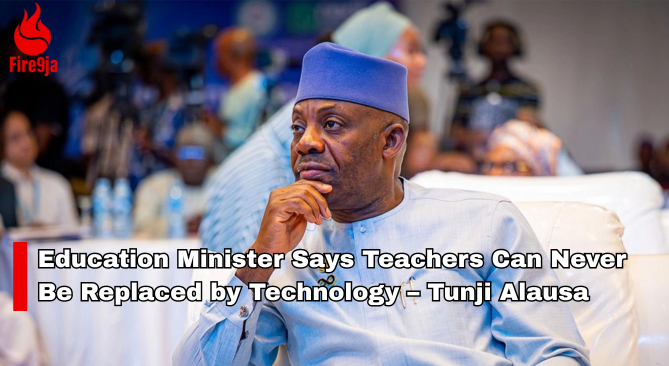
Minister of Education, Dr Tunji Alausa, speaks on the role and importance of teachers in the world to celebrate Teachers’ Day today.
He spoke on technology and its advancement and shared that while it is going well, teachers can never be replaced.
“These tools can help teachers reach learners and tailor instruction, but the judgement, encouragement and human connection of a skilled teacher remain indispensable,” he said.
“Every doctor, engineer, scientist, entrepreneur and public servant has benefited from a teacher and could not have become what they are today without teachers,” the minister said.
“When we honour teachers, we honour the people who make every other profession possible.”

Walid Acherchour Backs Lamine Yamal to Win 2026 Ballon d’Or

Zlatan Announces Wedding Date With Longtime Partner Davita

11 New K-Dramas To Add To Your Watch-list This October 2026


-

 Entertainment13 hours ago
Bridgerton Announces Violet and Edmund Love Story Spin-Off
-

 Entertainment13 hours ago
Mr Eazi Sparks Reactions With Comment About Expecting Twins
-

 Entertainment13 hours ago
From Men in Black to Aladdin: 10 Will Smith Movies
-

 Entertainment13 hours ago
10 Global Music Stars Who Became Famous At A Young Age
-
 Entertainment13 hours ago
11 New K-Dramas To Add To Your Watch-list This October 2026
-
 Sport13 hours ago
Walid Acherchour Backs Lamine Yamal to Win 2026 Ballon d’Or
-
 Entertainment13 hours ago
Zlatan Announces Wedding Date With Longtime Partner Davita