
News
Peter Obi Calls for Agricultural Investment to Tackle Africa’s Food and Human Insecurity

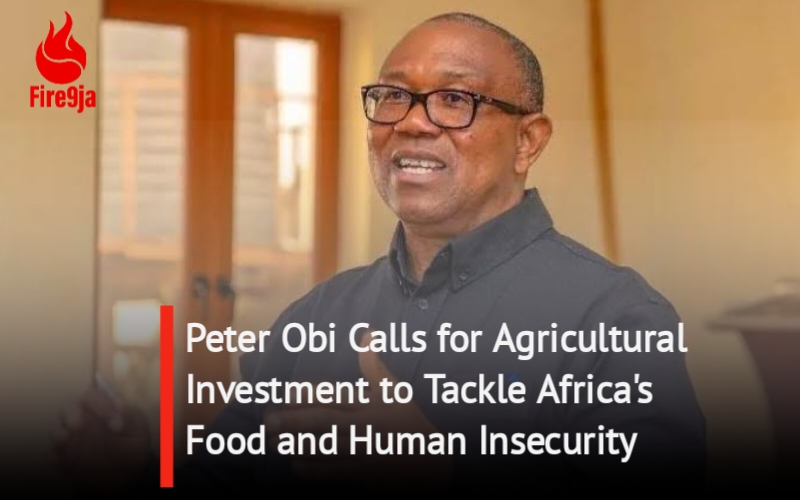
At the Africa Food Systems Forum 2024 held in Kigali, Rwanda, former Nigerian presidential candidate Peter Obi delivered a powerful message on the urgent need to address food insecurity across the continent.
Speaking as one of the panellists, Obi underscored the intrinsic link between food insecurity and human insecurity in Africa, using Nigeria as a case study.
In his address, Obi stressed that solving food insecurity is not just about addressing hunger, but also about creating massive job opportunities, particularly for the continent’s growing youth population.
He pointed out that investing in agriculture and food-related productivity could pave the way for general security in countries like Nigeria, where food shortages and unemployment are major concerns.
“By reducing reliance on food imports, Nigeria can ease the strain on its currency, stabilize exchange rates, and curb inflation caused by high food costs,” Obi noted.
To highlight Africa’s untapped agricultural potential, Obi compared Nigeria’s rice production with that of Bangladesh.
While Bangladesh, with a landmass six times smaller than Nigeria, produces 35-40 million tons of rice annually, Nigeria only produces 3-4 million tons—roughly 10% of Bangladesh’s output.
This disparity, according to Obi, reflects a broader challenge across Africa that can be tackled through targeted investments.
“Food insecurity, if addressed properly, can catalyze enhancing human security and driving overall development,” he said, calling for a holistic approach that includes sustainable agricultural practices and value-chain improvements.
Obi concluded by reaffirming that a food-secure Africa is central to achieving prosperity and stability.
He urged leaders and stakeholders to prioritize food systems as a means to empower communities, boost economic growth, and build a more secure and self-sufficient Africa.












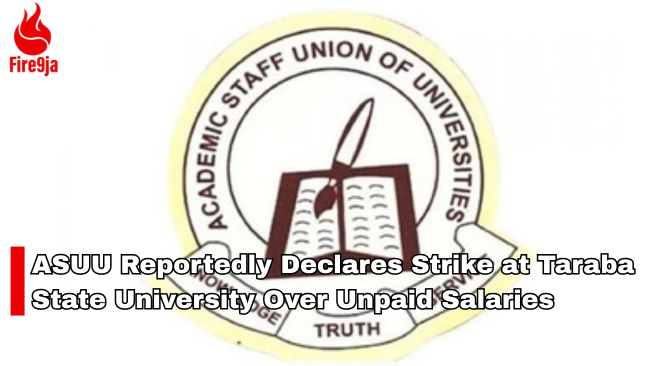
The Academic Staff Union of Universities (ASUU) has reportedly declared a strike at Taraba State University over outstanding salary-related demands and delays in payments.
The strike is scheduled to begin today, October 12, 2026. According to the union’s chairman, the union had been engaging the Taraba State Government over its outstanding demands since February 2026.
“The union had exercised considerable patience and demonstrated its commitment to dialogue since February 2026, when it began engaging the Taraba State Government over the outstanding issues,” Mbave said.
“The union had earlier suspended its planned industrial action following an appeal by the government for additional time through the Office of the Head of Civil Service, in the interest of maintaining industrial harmony,” the chairman added.
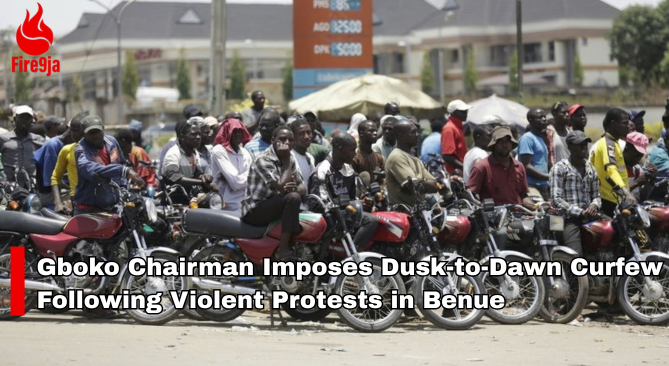
The Chairman of Gboko Local Government Area of Benue State, Torseer Yina, has imposed a dusk-to-dawn curfew in the ancient town.
The curfew takes effect from Thursday, October 8, 2026, following unrest and violent protests in the area.
According to reports, the action was taken to contain the unrest and violent protests by members of BEMOA following the death of one of its members by unknown gunmen.
The protest, which was reportedly hijacked by hoodlums, turned violent after an angry mob burnt two vehicles belonging to the Benue State Civil Protection Guards.
The Gboko council chairman said the curfew takes effect immediately and warned that anyone caught flouting the order or breaching public peace would be decisively dealt with.
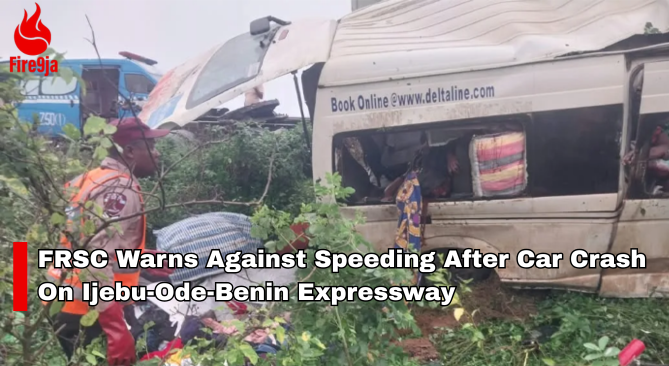
Nine people have died in a fatal road crash along the Ijebu-Ode-Benin Expressway in Ogun State.
The crash occurred on Monday at about 4:55pm around the Bethel area along the Ijebu-Ode/Ore axis of the expressway. It involved a white Toyota Hiace commercial bus belonging to Delta Line and a white Sino truck operated by Bill Gas Solution Ltd.
According to the Federal Road Safety Corps (FRSC), all nine people involved in the crash, comprising three males and six females, died in the incident.
The FRSC said the crash occurred while it was raining and the road was wet, with preliminary investigations identifying speed violation as the probable cause.
The FRSC rescue team arrived at the scene shortly after receiving the report, while the bodies of the victims were taken to the General Hospital Morgue in Ijebu-Ode.
The Ogun State Sector Commander, Oludare Ogunjobi, urged motorists, especially commercial drivers, to obey speed limits and exercise extra caution when driving in the rain.

Judge Tells Duane Davis He Must Face Justice for Tupac’s Murder

Timini Egbuson Reflects on Embracing YouTube Movies in Nollywood


