
News
Pick n Pay” to exit Nigeria after selling 51% its stake


South African retail giant Pick n Pay has announced its exit from the Nigerian market after selling a 51% stake in its Nigerian operations. The decision to withdraw comes as the company reassesses its African investment strategy amid various challenges faced in Nigeria, including logistical and economic hurdles that have affected its growth and profitability in the region.
Pick n Pay initially entered the Nigerian market with high hopes, seeing it as a strategic expansion opportunity in West Africa. However, the complex business environment, coupled with supply chain constraints, inflation, and changing consumer preferences, made it difficult for the brand to establish a strong foothold.
The retailer’s departure underscores the difficulty international brands often face in Nigeria’s dynamic retail sector, where factors like infrastructure limitations and fluctuating currency values complicate operations.
Despite its challenges, Pick n Pay expressed gratitude for the partnership and customer support it received in Nigeria, with hopes that its former stake will continue to operate under new ownership, potentially with a focus better aligned to the local market demands.
In conclusion, Pick n Pay’s exit from Nigeria, marked by the sale of its 51% stake, reflects the retailer’s strategic shift to consolidate its resources and optimize profitability elsewhere, shedding light on the complexities of operating in one of Africa’s most challenging but promising markets.














The Chairman of Gboko Local Government Area of Benue State, Torseer Yina, has imposed a dusk-to-dawn curfew in the ancient town.
The curfew takes effect from Thursday, October 8, 2026, following unrest and violent protests in the area.
According to reports, the action was taken to contain the unrest and violent protests by members of BEMOA following the death of one of its members by unknown gunmen.
The protest, which was reportedly hijacked by hoodlums, turned violent after an angry mob burnt two vehicles belonging to the Benue State Civil Protection Guards.
The Gboko council chairman said the curfew takes effect immediately and warned that anyone caught flouting the order or breaching public peace would be decisively dealt with.

Nine people have died in a fatal road crash along the Ijebu-Ode-Benin Expressway in Ogun State.
The crash occurred on Monday at about 4:55pm around the Bethel area along the Ijebu-Ode/Ore axis of the expressway. It involved a white Toyota Hiace commercial bus belonging to Delta Line and a white Sino truck operated by Bill Gas Solution Ltd.
According to the Federal Road Safety Corps (FRSC), all nine people involved in the crash, comprising three males and six females, died in the incident.
The FRSC said the crash occurred while it was raining and the road was wet, with preliminary investigations identifying speed violation as the probable cause.
The FRSC rescue team arrived at the scene shortly after receiving the report, while the bodies of the victims were taken to the General Hospital Morgue in Ijebu-Ode.
The Ogun State Sector Commander, Oludare Ogunjobi, urged motorists, especially commercial drivers, to obey speed limits and exercise extra caution when driving in the rain.
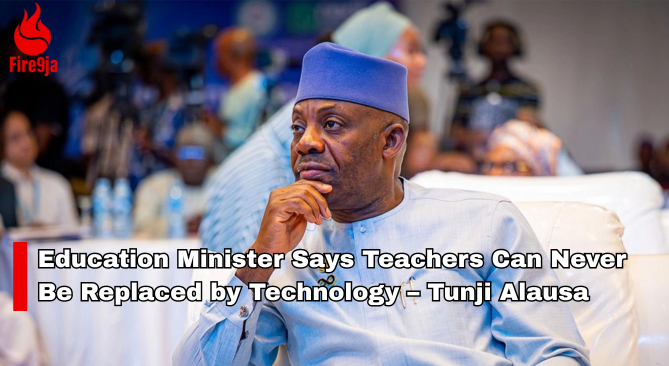
Minister of Education, Dr Tunji Alausa, speaks on the role and importance of teachers in the world to celebrate Teachers’ Day today.
He spoke on technology and its advancement and shared that while it is going well, teachers can never be replaced.
“These tools can help teachers reach learners and tailor instruction, but the judgement, encouragement and human connection of a skilled teacher remain indispensable,” he said.
“Every doctor, engineer, scientist, entrepreneur and public servant has benefited from a teacher and could not have become what they are today without teachers,” the minister said.
“When we honour teachers, we honour the people who make every other profession possible.”

Walid Acherchour Backs Lamine Yamal to Win 2026 Ballon d’Or

Zlatan Announces Wedding Date With Longtime Partner Davita

11 New K-Dramas To Add To Your Watch-list This October 2026


-

 Entertainment6 hours ago
Bridgerton Announces Violet and Edmund Love Story Spin-Off
-

 Entertainment6 hours ago
Mr Eazi Sparks Reactions With Comment About Expecting Twins
-

 Entertainment6 hours ago
From Men in Black to Aladdin: 10 Will Smith Movies
-
 Entertainment6 hours ago
11 New K-Dramas To Add To Your Watch-list This October 2026
-

 Entertainment6 hours ago
10 Global Music Stars Who Became Famous At A Young Age
-
 Sport6 hours ago
Walid Acherchour Backs Lamine Yamal to Win 2026 Ballon d’Or
-
 Entertainment6 hours ago
Zlatan Announces Wedding Date With Longtime Partner Davita