
News
US Bombs Iran’s Nuclear Sites as Iran Fires Missiles Back and Tensions Rise in Gulf

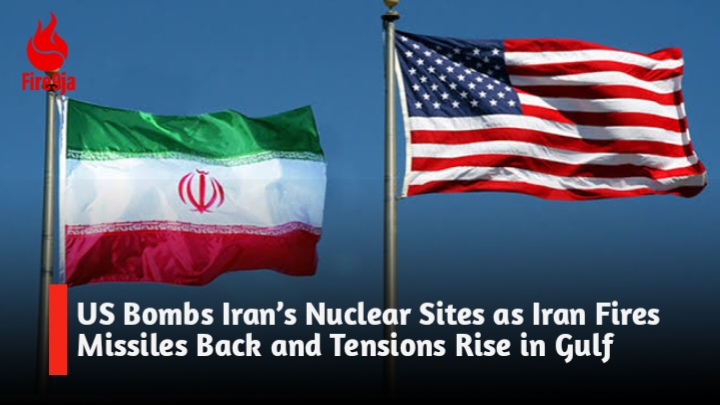
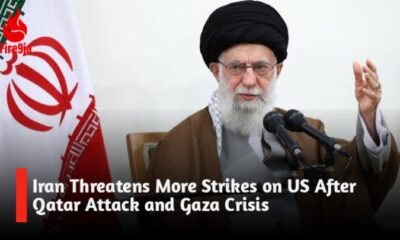
The tension between the United States and Iran has taken a serious turn after both countries exchanged military strikes in the past few days, putting the entire Gulf region on edge. It all started on Friday, June 21, when the U.S. military carried out a heavy airstrike operation called Operation Midnight Hammer. Using stealth bombers, submarines, and precision-guided missiles, the U.S. hit three of Iran’s major nuclear sites located deep underground in Fordow, Natanz, and Isfahan. According to U.S. officials, those sites were targeted to weaken Iran’s nuclear program and stop any further development.
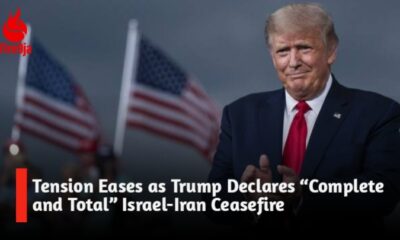
The U.S. government later said the mission was successful, claiming significant damage was done to Iran’s nuclear facilities. President Trump also warned that America was ready to strike again if Iran pushed back.
Not long after, Iran responded.
In the early hours of Sunday, June 23, Iran launched several missiles toward U.S. military bases in Qatar and Iraq, calling their counterattack Operation Tidings of Victory. Reports from Qatar confirmed that most of the missiles were intercepted, and no casualties were recorded, but Iran described the strike as a strong warning to Washington.
Additionally, Iran’s parliament passed a controversial bill threatening to shut down the Strait of Hormuz, a vital sea route where almost a quarter of the world’s oil passes through daily. If Iran follows through with this threat, it could disrupt global oil supply and send fuel prices soaring.
Meanwhile, the U.S. is not taking chances.
Thousands of American troops have been deployed to the Gulf region, alongside warships, submarines, fighter jets, and missile defense systems. Two major aircraft carriers; the USS Carl Vinson and the USS Nimitz; are already stationed in nearby waters, ready for action if needed. The situation has left countries in the region on high alert. Leaders in Saudi Arabia, Qatar, the UAE, and other Gulf states are calling for calm while strengthening their own security. There are also concerns that Iran might use allied groups like Hezbollah or militias in Iraq to launch attacks indirectly.
Globally, Russia and China have openly criticized the U.S. strikes, describing them as dangerous. The United Nations held emergency talks, urging both sides to avoid further violence. However, oil prices surprisingly dipped slightly, as many traders believe the situation might cool down through diplomacy before it disrupts oil supplies.
In the U.S., political debates have broken out. Some lawmakers, including Republicans and Democrats, have raised questions about whether the President had the authority to carry out the strikes without full approval from Congress. Others argue the strikes were necessary to prevent Iran from advancing its nuclear program. For now, both sides appear to be watching each other closely. The U.S. has made it clear they are ready for further military action, while Iran has promised more retaliation if provoked.











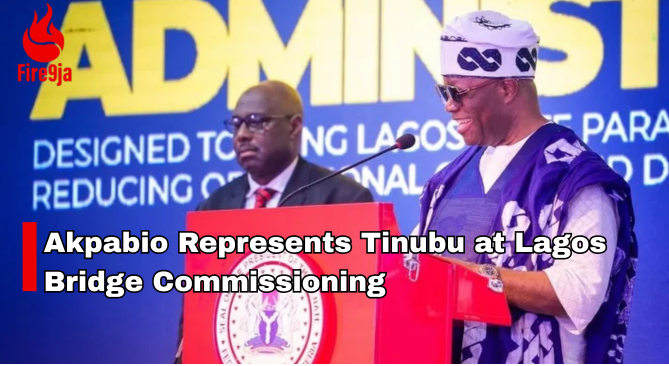
It has been reported that Bola Ahmed Tinubu was absent at the commissioning of the Opebi-Mende Link Bridge, which took place on April 8, 2026.
However, Senate President Godswill Akpabio represented the President and carried out the ceremony.
As he commissioned the project, he stated “On behalf of President Bola Ahmed Tinubu, I commission these projects.”
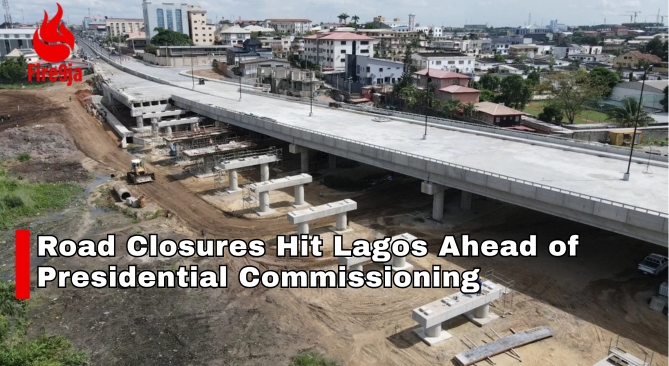
Residents of Lagos should prepare for traffic disruptions as several roads will be closed due to the visit of Bola Ahmed Tinubu, who is set to commission infrastructural projects.
The commissioning will take place on April 8 and 9, 2026.
Affected areas on Wednesday (April 8):
Opebi, Allen Avenue, Ikeja, Ojota, and Victoria Island.
Affected areas on Thursday (April 9):
Lekki-Epe Expressway, Ikoyi, Victoria Island, and Ajegunle.
Motorists are advised to plan alternative routes and expect heavy traffic during these periods.
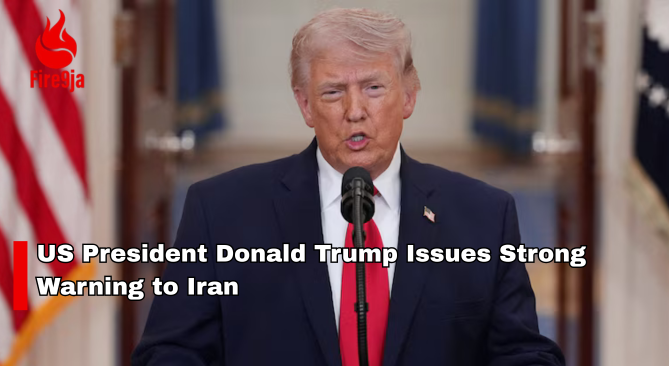
President Donald Trump makes headline as he threatens Iran on social media.
The president shared “Open the F***ing Strait, you crazy bastards, or you’ll be living in Hell — JUST WATCH!”
It can be noted that he even did a countdown on Saturday “48 hours before all Hell will rain down on them,” he warned Saturday. “Time is running out.”

Fans React as Wizkid Joins Burna Boy–DJ Tunez Drama

Moses Bliss Apologises After Graphic Design Backlash

Is AI Replacing Artists? DJ Neptune Shares Concerns


-
 News9 hours ago
Akpabio Represents Tinubu at Lagos Bridge Commissioning
-

 Sport8 hours ago
Lookman Applauds Atlético Madrid After 2–0 Win Over Barcelona
-
 Entertainment5 hours ago
Moses Bliss Apologises After Graphic Design Backlash
-
 Entertainment5 hours ago
Fans React as Wizkid Joins Burna Boy–DJ Tunez Drama
-
 Entertainment7 hours ago
Is AI Replacing Artists? DJ Neptune Shares Concerns