
News
US Bombs Iran’s Nuclear Sites as Iran Fires Missiles Back and Tensions Rise in Gulf

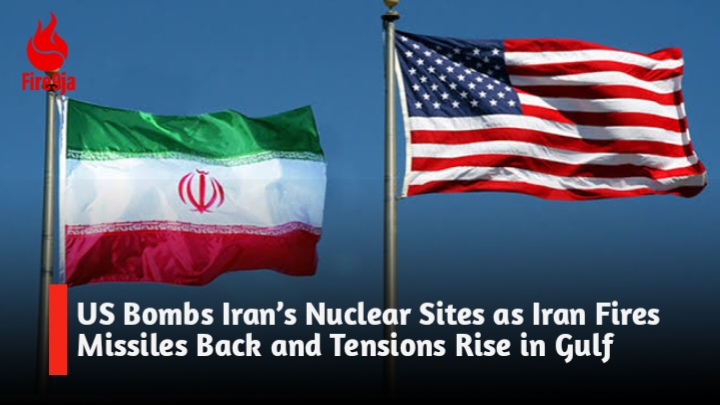
The tension between the United States and Iran has taken a serious turn after both countries exchanged military strikes in the past few days, putting the entire Gulf region on edge. It all started on Friday, June 21, when the U.S. military carried out a heavy airstrike operation called Operation Midnight Hammer. Using stealth bombers, submarines, and precision-guided missiles, the U.S. hit three of Iran’s major nuclear sites located deep underground in Fordow, Natanz, and Isfahan. According to U.S. officials, those sites were targeted to weaken Iran’s nuclear program and stop any further development.
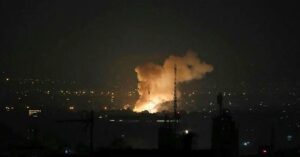
The U.S. government later said the mission was successful, claiming significant damage was done to Iran’s nuclear facilities. President Trump also warned that America was ready to strike again if Iran pushed back.
Not long after, Iran responded.
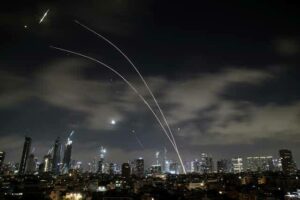
In the early hours of Sunday, June 23, Iran launched several missiles toward U.S. military bases in Qatar and Iraq, calling their counterattack Operation Tidings of Victory. Reports from Qatar confirmed that most of the missiles were intercepted, and no casualties were recorded, but Iran described the strike as a strong warning to Washington.
Additionally, Iran’s parliament passed a controversial bill threatening to shut down the Strait of Hormuz, a vital sea route where almost a quarter of the world’s oil passes through daily. If Iran follows through with this threat, it could disrupt global oil supply and send fuel prices soaring.
Meanwhile, the U.S. is not taking chances.
Thousands of American troops have been deployed to the Gulf region, alongside warships, submarines, fighter jets, and missile defense systems. Two major aircraft carriers; the USS Carl Vinson and the USS Nimitz; are already stationed in nearby waters, ready for action if needed. The situation has left countries in the region on high alert. Leaders in Saudi Arabia, Qatar, the UAE, and other Gulf states are calling for calm while strengthening their own security. There are also concerns that Iran might use allied groups like Hezbollah or militias in Iraq to launch attacks indirectly.
Globally, Russia and China have openly criticized the U.S. strikes, describing them as dangerous. The United Nations held emergency talks, urging both sides to avoid further violence. However, oil prices surprisingly dipped slightly, as many traders believe the situation might cool down through diplomacy before it disrupts oil supplies.
In the U.S., political debates have broken out. Some lawmakers, including Republicans and Democrats, have raised questions about whether the President had the authority to carry out the strikes without full approval from Congress. Others argue the strikes were necessary to prevent Iran from advancing its nuclear program. For now, both sides appear to be watching each other closely. The U.S. has made it clear they are ready for further military action, while Iran has promised more retaliation if provoked.












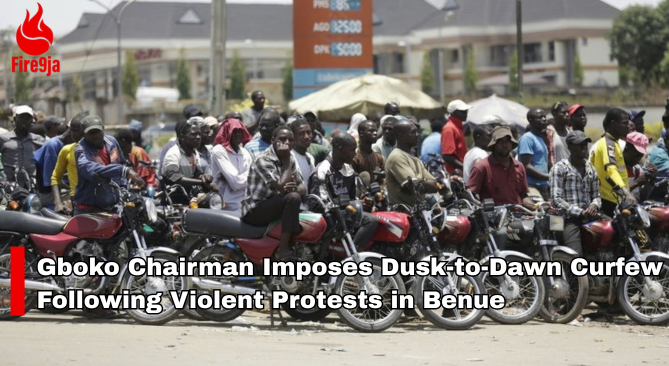
The Chairman of Gboko Local Government Area of Benue State, Torseer Yina, has imposed a dusk-to-dawn curfew in the ancient town.
The curfew takes effect from Thursday, October 8, 2026, following unrest and violent protests in the area.
According to reports, the action was taken to contain the unrest and violent protests by members of BEMOA following the death of one of its members by unknown gunmen.
The protest, which was reportedly hijacked by hoodlums, turned violent after an angry mob burnt two vehicles belonging to the Benue State Civil Protection Guards.
The Gboko council chairman said the curfew takes effect immediately and warned that anyone caught flouting the order or breaching public peace would be decisively dealt with.
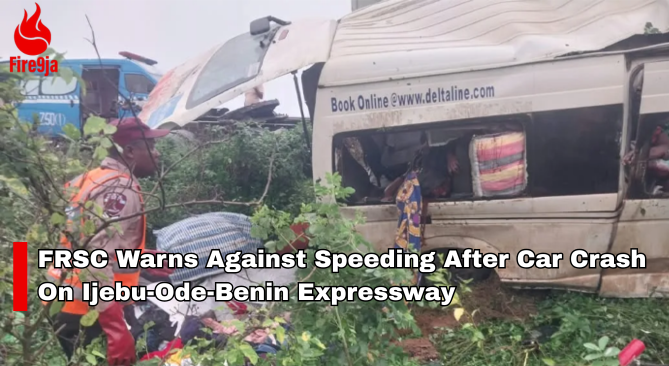
Nine people have died in a fatal road crash along the Ijebu-Ode-Benin Expressway in Ogun State.
The crash occurred on Monday at about 4:55pm around the Bethel area along the Ijebu-Ode/Ore axis of the expressway. It involved a white Toyota Hiace commercial bus belonging to Delta Line and a white Sino truck operated by Bill Gas Solution Ltd.
According to the Federal Road Safety Corps (FRSC), all nine people involved in the crash, comprising three males and six females, died in the incident.
The FRSC said the crash occurred while it was raining and the road was wet, with preliminary investigations identifying speed violation as the probable cause.
The FRSC rescue team arrived at the scene shortly after receiving the report, while the bodies of the victims were taken to the General Hospital Morgue in Ijebu-Ode.
The Ogun State Sector Commander, Oludare Ogunjobi, urged motorists, especially commercial drivers, to obey speed limits and exercise extra caution when driving in the rain.

Minister of Education, Dr Tunji Alausa, speaks on the role and importance of teachers in the world to celebrate Teachers’ Day today.
He spoke on technology and its advancement and shared that while it is going well, teachers can never be replaced.
“These tools can help teachers reach learners and tailor instruction, but the judgement, encouragement and human connection of a skilled teacher remain indispensable,” he said.
“Every doctor, engineer, scientist, entrepreneur and public servant has benefited from a teacher and could not have become what they are today without teachers,” the minister said.
“When we honour teachers, we honour the people who make every other profession possible.”

Walid Acherchour Backs Lamine Yamal to Win 2026 Ballon d’Or

Zlatan Announces Wedding Date With Longtime Partner Davita

11 New K-Dramas To Add To Your Watch-list This October 2026


-

 Entertainment7 hours ago
Bridgerton Announces Violet and Edmund Love Story Spin-Off
-

 Entertainment7 hours ago
Mr Eazi Sparks Reactions With Comment About Expecting Twins
-

 Entertainment7 hours ago
From Men in Black to Aladdin: 10 Will Smith Movies
-
 Entertainment7 hours ago
11 New K-Dramas To Add To Your Watch-list This October 2026
-

 Entertainment7 hours ago
10 Global Music Stars Who Became Famous At A Young Age
-
 Sport7 hours ago
Walid Acherchour Backs Lamine Yamal to Win 2026 Ballon d’Or
-
 Entertainment7 hours ago
Zlatan Announces Wedding Date With Longtime Partner Davita