
Business
World Bank Urges Nigeria to Improve Public Spending to Increase Economic Growth


The World Bank, based in Washington, has highlighted that inefficient public spending is draining a significant portion of investments in Nigeria and other developing nations.
This revelation comes from the bank’s latest report, titled “How Can Developing Countries Power Up Public Investment?”
The report is a critical issue: over one-third of public investment in emerging markets and developing economies is wasted due to inefficiencies.
This not only stunts economic growth but also hampers overall development potential.
In some extreme cases, it results in costly “white elephant” projects, which yield minimal economic benefits despite their high costs.
These projects further jeopardize a country’s sovereign risk and debt sustainability.
According to the World Bank, improving government spending efficiency is key to fully reaping the rewards of public investments.
It is estimated that the inefficiency of public spending in emerging markets and developing economies (EMDEs) is much higher compared to advanced economies.
Factors such as regulatory obstacles, corruption, and institutional shortcomings often contribute to the creation of lower-quality projects that fail to generate the intended benefits.
To address these challenges, the World Bank recommends that developing countries strengthen public spending practices by embracing transparency in procurement processes and ensuring robust monitoring of projects.
Such measures could significantly improve the impact of public investments.
In Nigeria, the urgency of improving investments is palpable.
Wale Edun, the country’s finance minister, recently emphasized that Nigeria requires an annual investment of $20 billion to achieve its ambitious target of reaching a $1 trillion economy by 2030.












Bitcoin has fallen below $63,000, reaching its lowest level since October 2024 amid weakening investor confidence and increased volatility in the cryptocurrency market.
According to CoinMarketCap data, Bitcoin dropped 13.9 per cent to $62,965 as of 10:20 p.m. on Thursday. The decline comes after months of downward movement, with the cryptocurrency now more than 45 per cent below its October peak.
Ethereum also recorded a sharp decline, falling 13 per cent to $1,863, while the global cryptocurrency market capitalisation dropped to $2.19 trillion.
Analysts reportedly linked the latest decline to a broader sell-off in US technology stocks, which has also affected other risk assets. Bitcoin had reached an all-time high of more than $125,000 on October 5 before falling sharply in the days that followed, highlighting the continued volatility in the crypto market.
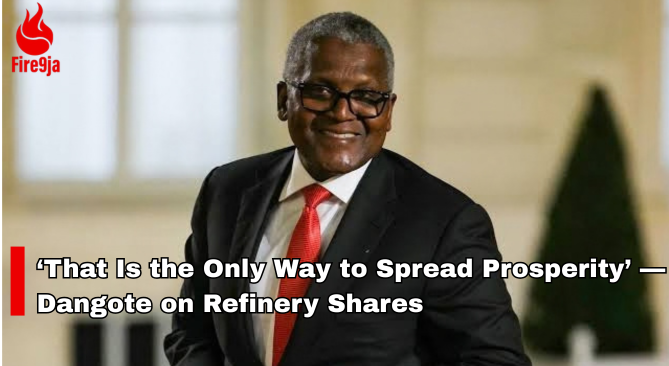
Businessman Aliko Dangote has explained why he believes Nigerians should participate in the ownership of his refinery by purchasing shares.
He was asked by singer Davido why Nigerians should participate, and Dangote explained that the initiative would help spread wealth and prosperity across Africa.
“Well, it’s very important because that is the only way to spread prosperity and wealth throughout Africa. And like I said, this is not going to be the first and the last. We will continue with even our fertilizer. By the time we finish listing, every single one will own part of our businesses and we will create a pool of cash…”
He explained that the goal is to create opportunities for more Nigerians to own a stake in the businesses and help spread wealth across the country.
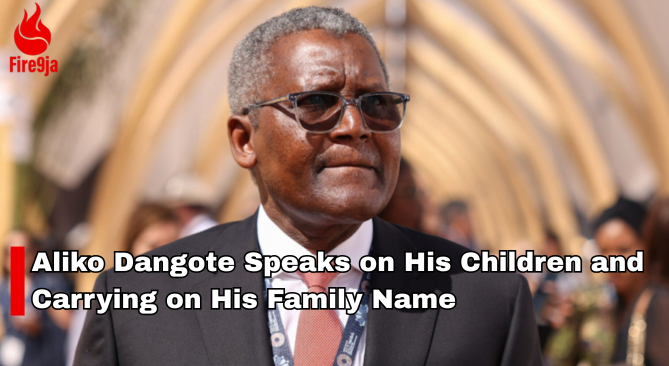
Aliko Dangote speaks on his lineage and addresses not having a son as he was asked about not having a son to carry his name and achievements.
“That is not my priority because God controls everything. You can pray for God to give you a son, but he might be the one to take down the name of the family.”
Instead, he shared that he does not mind not having a son. “I don’t think a son would have done better than the three daughters I have.”
Aside from that, he was also asked about giving advice to young Nigerians. “Work hard, be consistent, focused and know what you want to do.”

Judge Tells Duane Davis He Must Face Justice for Tupac’s Murder

Timini Egbuson Reflects on Embracing YouTube Movies in Nollywood


