Connect with us

News

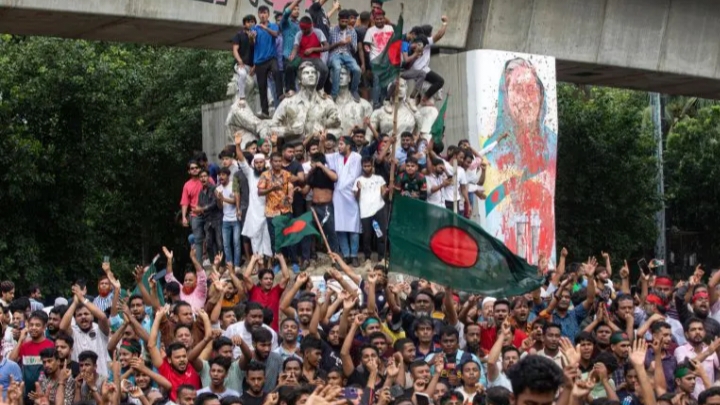
Bangladesh Parliament Dissolved as PM Sheikh Hasina Resigns Amid Protests

Published

on

Photo source: Twitter

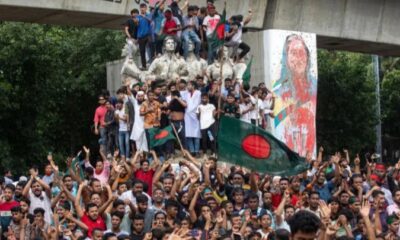
The Bangladeshi Parliament has been dissolved following a dramatic series of events that unfolded recently.

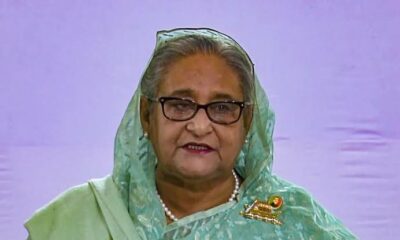
The dissolution came in the wake of Prime Minister Sheikh Hasina’s resignation and subsequent flight from the country amid intense and violent protests calling for her removal.

On Tuesday, the president’s office released a statement announcing the dissolution of Parliament.

This decision followed a high-pressure situation, as student leaders, who had been at the forefront of the protests, issued an ultimatum demanding the dissolution of Parliament.

They warned of more severe measures if their demands were not met within the stipulated timeframe.

Advertisement

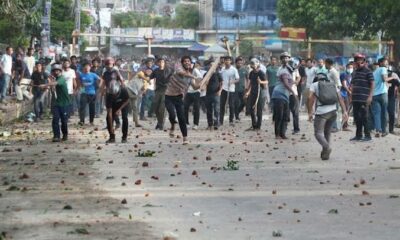
Prime Minister Sheikh Hasina resigned on Monday, a direct response to weeks of escalating violence from student protesters that resulted in over 300 casualties.

Following her resignation, a wave of attacks and looting targeted offices of the Awami League, Hasina’s political party, as well as the homes of its leaders throughout Dhaka and other regions.

In a related development, Army Chief General Waker-Uz-Zaman addressed the nation on Monday, after conferring with various political party leaders, with the notable exception of those from the Awami League.

General Waker-Uz-Zaman urged the student protesters to exercise patience and avoid further violence.

He assured the public that those responsible for the recent violence and atrocities would be held accountable, and appealed to the citizens to trust the military’s commitment to upholding justice and restoring order.

Advertisement


Continue Reading
Click to comment

Leave a Reply

Your email address will not be published. Required fields are marked *

News

Federal Government Says ₦1.5m Monthly Salary for President is Too Small

Published

on

Photo source: Google

The Federal Government has announced plans to review the salaries of top political office holders, including the President, governors, ministers, and other senior officials. Officials say the current pay is no longer enough considering the responsibilities and challenges these leaders face.

At a press briefing in Abuja, Mohammed Shehu, Chairman of the Revenue Mobilisation Allocation and Fiscal Commission (RMAFC), revealed that President Bola Tinubu currently earns ₦1.5 million per month, while ministers take home less than ₦1 million monthly. These figures, he noted, have not changed since 2008. Shehu described the current pay structure as “unrealistic” and “untenable” for the people in these positions.

Shehu also highlighted huge gaps in pay across government offices. For example, the Governor of the Central Bank of Nigeria earns about ten times more than the President, while heads of certain agencies can make up to twenty times more than the Attorney-General of the Federation. He called this imbalance “unfair and unacceptable.”

The RMAFC emphasized that it is constitutionally responsible for determining the salaries of political, judicial, and legislative office holders, though it does not control salaries for civil servants or other public sector workers. The proposed review has drawn criticism from labor groups. The Nigeria Labour Congress (NLC) argued that the move overlooks growing inequality and the many allowances and perks already available to public officials.

The government says it will engage with labor unions, civil society groups, and other stakeholders to ensure a fair approach to the salary adjustments.

Advertisement


Continue Reading

News

Obi and Atiku: What If Obi Steps Down For Atiku in 2027

Published

on

Photo source: Google

As the 2027 presidential race draws closer, conversations around alliances and sacrifices are getting louder. Two names that stand out in the mix are former Vice President Atiku Abubakar and former Anambra governor Peter Obi. Both men now belong to the African Democratic Congress (ADC), a platform that is pushing to challenge the ruling party.

For now, Obi has made it clear that he is not contesting as anyone’s deputy. He insists he is in the race for the top job and denies having any agreement with Atiku. Still, political watchers have not stopped speculating about a possible deal that could see one of them step down for the other.

If Obi were to step aside for Atiku, a few things could happen. First, the opposition could suddenly look stronger. Atiku commands influence in the north, while Obi carries the backing of young, urban, and southern voters. Together, that combination could shake the ruling party and create real competition.

But the risks are also obvious. Obi’s supporters, popularly called the “Obidients,” might not take it lightly. Many of them see him as a symbol of change, not someone who compromises for political convenience. If he drops out, a section of his base might feel betrayed and even pull back from the polls.

Inside the ADC, such a move could also cause problems. There are already controversies about zoning, fairness, and the need for fresh leadership. An Obi withdrawal in favor of Atiku could cause issues and weaken the unity the coalition is trying to build.

Advertisement

At the same time, critics and rivals would not miss the chance to frame Obi’s decision as a sell-out move. They would question whether he truly stands by the principles he preaches. That could hurt his image, even if the alliance looks good on paper.

Wrapping up, if Obi steps down for Atiku, the opposition may look more united, but it risks losing the energy and loyalty that Obi himself brings to the race. For now, he insists he is not backing out, and there is no concrete agreement suggesting otherwise.


Continue Reading

News

FG to Give ₦75,000 Cash to 2.2 Million Families in Nigeria

Published

on

Photo source: Google

The Federal Government has confirmed that it will begin sharing cash support to vulnerable households across the country within the next two weeks. The Minister of Humanitarian Affairs and Poverty Alleviation, Tanko Sununu, explained that the initiative is part of efforts to cushion the hardship faced by millions of Nigerians.

According to the minister, about 2.2 million households are expected to benefit from the scheme. He assured citizens that the process will be carried out openly, stressing that transparency is a key priority for the government this time.

However, the announcement has already gotten reactions. While many struggling families welcome the news, civil society groups have raised concerns about accountability. Groups like HURIWA have called on the government to go beyond verbal assurances and publish clear details of how beneficiaries are selected and how the funds will be disbursed. They argue that without open records, the scheme could fall into the same trust problems that affected past interventions.

Cash transfers are not new in Nigeria. Since 2015, different governments have used similar programs to provide temporary relief for low-income families. But critics say the success of such initiatives depends largely on proper monitoring and fairness in distribution.


Advertisement
Continue Reading

Trending