
Business
Dangote Refinery Denies Payment from IPMAN and Clarifies NNPCL’s Role As Sales

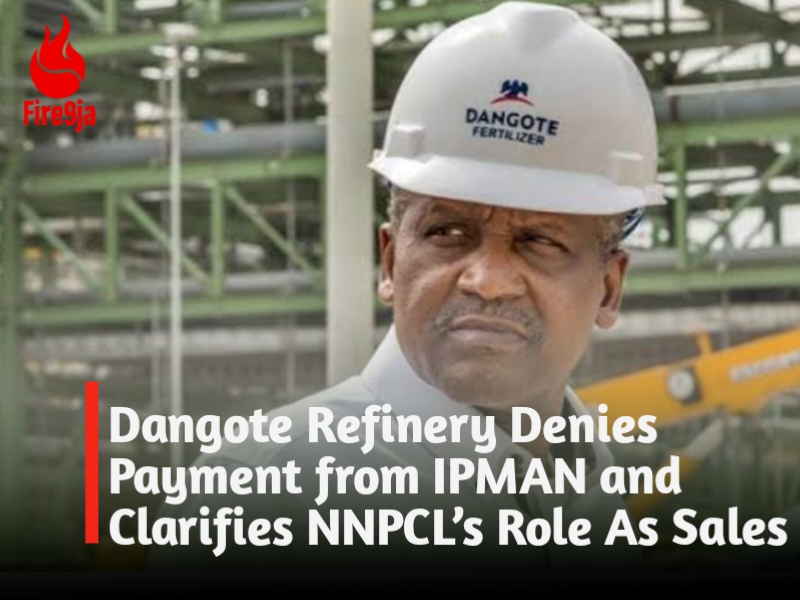
Dangote Petroleum Refinery has firmly denied receiving any payments from the Independent Petroleum Marketers Association of Nigeria (IPMAN) for the purchase of refined petroleum products.
The clarification came in a statement from Anthony Chiejina, the Group Chief Branding and Communications Officer of Dangote Group, emphasizing that despite ongoing talks with IPMAN, no transactions have been finalized.
According to Chiejina, rumours suggesting that IPMAN members are facing difficulties in loading refined products from Dangote Refinery are misleading.
“We currently have no direct business dealings with IPMAN,” he explained, mentioning that any issues IPMAN might be facing are unrelated to Dangote Refinery’s operations.
The company underscored that it bears no responsibility for any payments IPMAN may have made to other parties, as it hasn’t received any funds from them.
The statement also clarified that the payment in question had been made through the Nigerian National Petroleum Company Limited (NNPCL), not through Dangote Refinery itself.
Additionally, NNPCL has not granted any approval or authorization for Dangote to release its Premium Motor Spirit (PMS) to IPMAN, further confirming that there are no formal distribution arrangements between the refinery and the association.
Dangote Refinery touted as a game-changer for Nigeria’s energy landscape, also assured that it can meet the country’s full demand for petroleum products.
With the capability to load up to 2,900 trucks daily, the refinery stands ready to support Nigeria’s energy needs once direct agreements with distributors are in place.












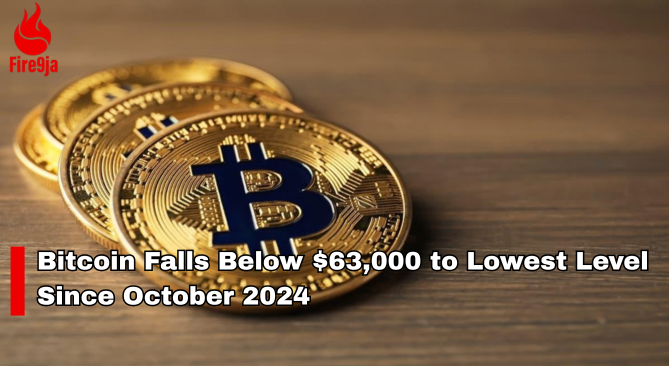
Bitcoin has fallen below $63,000, reaching its lowest level since October 2024 amid weakening investor confidence and increased volatility in the cryptocurrency market.
According to CoinMarketCap data, Bitcoin dropped 13.9 per cent to $62,965 as of 10:20 p.m. on Thursday. The decline comes after months of downward movement, with the cryptocurrency now more than 45 per cent below its October peak.
Ethereum also recorded a sharp decline, falling 13 per cent to $1,863, while the global cryptocurrency market capitalisation dropped to $2.19 trillion.
Analysts reportedly linked the latest decline to a broader sell-off in US technology stocks, which has also affected other risk assets. Bitcoin had reached an all-time high of more than $125,000 on October 5 before falling sharply in the days that followed, highlighting the continued volatility in the crypto market.
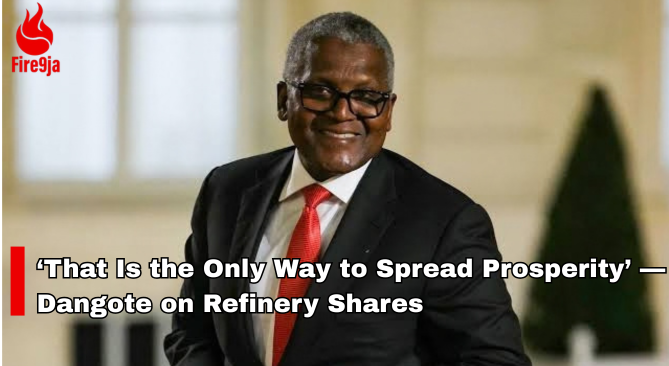
Businessman Aliko Dangote has explained why he believes Nigerians should participate in the ownership of his refinery by purchasing shares.
He was asked by singer Davido why Nigerians should participate, and Dangote explained that the initiative would help spread wealth and prosperity across Africa.
“Well, it’s very important because that is the only way to spread prosperity and wealth throughout Africa. And like I said, this is not going to be the first and the last. We will continue with even our fertilizer. By the time we finish listing, every single one will own part of our businesses and we will create a pool of cash…”
He explained that the goal is to create opportunities for more Nigerians to own a stake in the businesses and help spread wealth across the country.

Aliko Dangote speaks on his lineage and addresses not having a son as he was asked about not having a son to carry his name and achievements.
“That is not my priority because God controls everything. You can pray for God to give you a son, but he might be the one to take down the name of the family.”
Instead, he shared that he does not mind not having a son. “I don’t think a son would have done better than the three daughters I have.”
Aside from that, he was also asked about giving advice to young Nigerians. “Work hard, be consistent, focused and know what you want to do.”

Walid Acherchour Backs Lamine Yamal to Win 2026 Ballon d’Or

Zlatan Announces Wedding Date With Longtime Partner Davita

11 New K-Dramas To Add To Your Watch-list This October 2026


-

 Entertainment10 hours ago
Bridgerton Announces Violet and Edmund Love Story Spin-Off
-

 Entertainment10 hours ago
From Men in Black to Aladdin: 10 Will Smith Movies
-

 Entertainment10 hours ago
Mr Eazi Sparks Reactions With Comment About Expecting Twins
-

 Entertainment10 hours ago
10 Global Music Stars Who Became Famous At A Young Age
-
 Entertainment10 hours ago
11 New K-Dramas To Add To Your Watch-list This October 2026
-
 Sport10 hours ago
Walid Acherchour Backs Lamine Yamal to Win 2026 Ballon d’Or
-
 Entertainment10 hours ago
Zlatan Announces Wedding Date With Longtime Partner Davita