
Business
Minister Adebayo Adelabu Claims Nigeria Offers Most Affordable Electricity in Africa

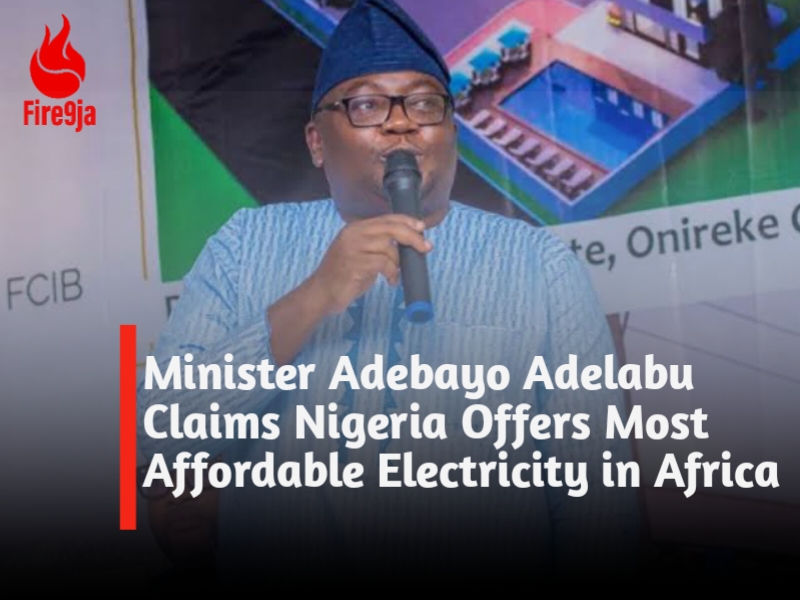
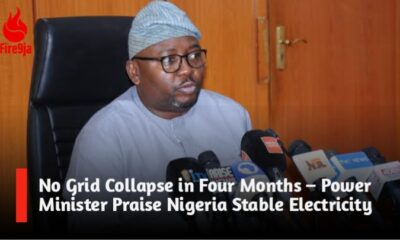
The Minister of Power, Adebayo Adelabu, has asserted that Nigeria boasts some of the lowest electricity prices in Africa, despite the rising energy costs that many citizens are currently facing.
This statement was made during a recent meeting with Tosin Adeyanju, the Secretary of the Lottery Trust Fund, in Abuja, where the minister emphasized the government’s commitment to addressing the challenges of food and energy security.
Adelabu highlighted that both food and energy security are pressing issues globally, affecting many nations, including Nigeria.
He stressed the importance of patience among Nigerians, reassuring them that the government is dedicated to improving their welfare and addressing the difficulties they encounter in daily life.
As of July 1, 2024, electricity distribution companies in Nigeria have set their rates at N209.5 per kilowatt-hour for customers in Band A, who typically enjoy 20-22 hours of service each day.
This pricing follows a significant tariff increase approved by the Nigerian Electricity Regulatory Commission earlier this year, which raised rates from N66 to N225 per kilowatt-hour.
Adelabu’s comments come at a time when many Nigerians are struggling with increased energy costs across the board, including petrol and diesel prices.
The minister’s assertion that Nigeria’s electricity is the cheapest in Africa stands in contrast to the higher rates in countries like Senegal and Togo, where electricity costs are considerably more expensive, priced at N296.10 and N353.68 per kilowatt-hour, respectively.
However, the minister’s claim also comes with a caveat, as electricity prices in neighboring countries such as Ivory Coast and Ghana are lower, standing at N195.76 and N205.62 per kilowatt-hour, respectively.
This context raises questions about the overall affordability of electricity in Nigeria compared to other nations.
In summary, while Minister Adebayo Adelabu insists that Nigeria’s electricity prices remain competitive within the African context, the ongoing challenges of rising costs for energy and essential services underscore the need for continued government efforts to ensure that the welfare of Nigerians remains a priority.
The government is expected to explore ways to balance affordable energy rates with the need for sustainable growth in the energy sector, all while addressing the broader issues of food and energy security that impact the nation.









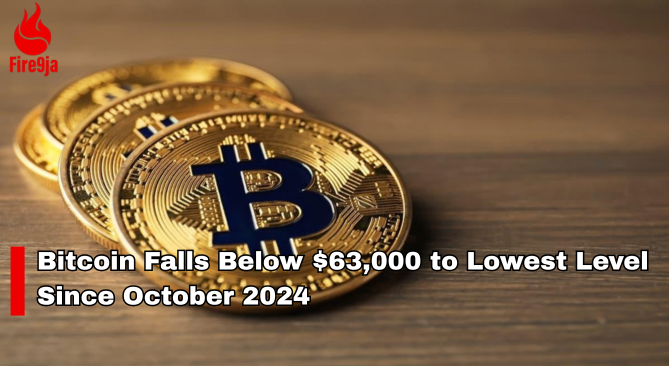
Bitcoin has fallen below $63,000, reaching its lowest level since October 2024 amid weakening investor confidence and increased volatility in the cryptocurrency market.
According to CoinMarketCap data, Bitcoin dropped 13.9 per cent to $62,965 as of 10:20 p.m. on Thursday. The decline comes after months of downward movement, with the cryptocurrency now more than 45 per cent below its October peak.
Ethereum also recorded a sharp decline, falling 13 per cent to $1,863, while the global cryptocurrency market capitalisation dropped to $2.19 trillion.
Analysts reportedly linked the latest decline to a broader sell-off in US technology stocks, which has also affected other risk assets. Bitcoin had reached an all-time high of more than $125,000 on October 5 before falling sharply in the days that followed, highlighting the continued volatility in the crypto market.
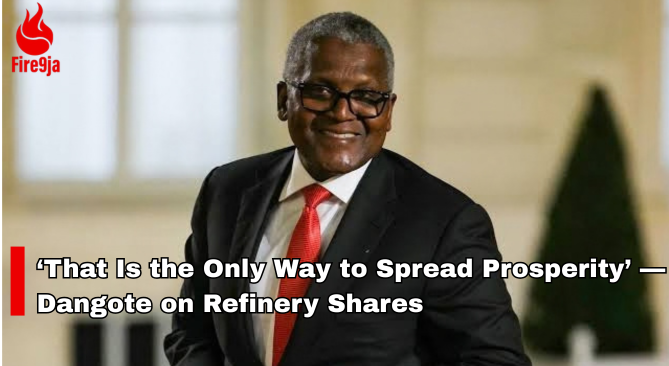
Businessman Aliko Dangote has explained why he believes Nigerians should participate in the ownership of his refinery by purchasing shares.
He was asked by singer Davido why Nigerians should participate, and Dangote explained that the initiative would help spread wealth and prosperity across Africa.
“Well, it’s very important because that is the only way to spread prosperity and wealth throughout Africa. And like I said, this is not going to be the first and the last. We will continue with even our fertilizer. By the time we finish listing, every single one will own part of our businesses and we will create a pool of cash…”
He explained that the goal is to create opportunities for more Nigerians to own a stake in the businesses and help spread wealth across the country.
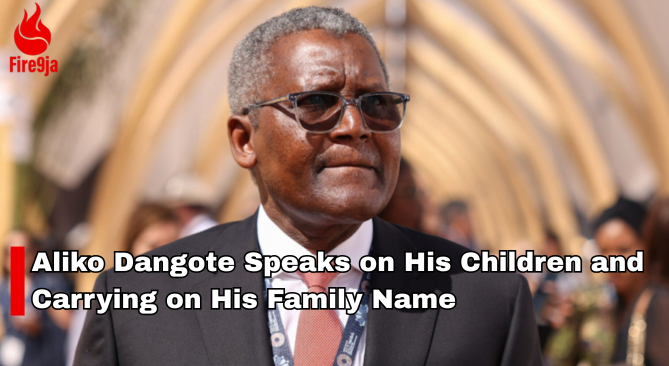
Aliko Dangote speaks on his lineage and addresses not having a son as he was asked about not having a son to carry his name and achievements.
“That is not my priority because God controls everything. You can pray for God to give you a son, but he might be the one to take down the name of the family.”
Instead, he shared that he does not mind not having a son. “I don’t think a son would have done better than the three daughters I have.”
Aside from that, he was also asked about giving advice to young Nigerians. “Work hard, be consistent, focused and know what you want to do.”

Walid Acherchour Backs Lamine Yamal to Win 2026 Ballon d’Or

Zlatan Announces Wedding Date With Longtime Partner Davita

11 New K-Dramas To Add To Your Watch-list This October 2026


-

 Entertainment10 hours ago
Bridgerton Announces Violet and Edmund Love Story Spin-Off
-

 Entertainment10 hours ago
From Men in Black to Aladdin: 10 Will Smith Movies
-

 Entertainment10 hours ago
Mr Eazi Sparks Reactions With Comment About Expecting Twins
-

 Entertainment10 hours ago
10 Global Music Stars Who Became Famous At A Young Age
-
 Entertainment10 hours ago
11 New K-Dramas To Add To Your Watch-list This October 2026
-
 Sport10 hours ago
Walid Acherchour Backs Lamine Yamal to Win 2026 Ballon d’Or
-
 Entertainment10 hours ago
Zlatan Announces Wedding Date With Longtime Partner Davita