News
Why Nigeria’s National Power Grid Collapses and How It Works

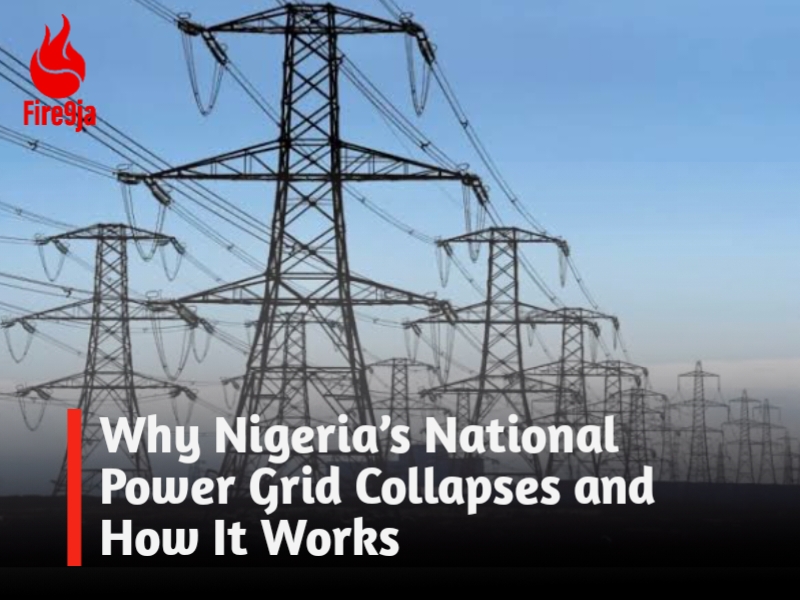
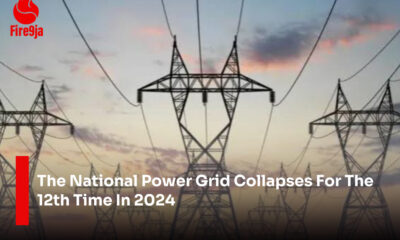
The Nigerian national power grid has once again made headlines as it grapples with the challenges of providing consistent and reliable electricity to the nation.
The National Grid system, which is a vital part of Nigeria’s power infrastructure, was recently discussed on its official social media platform, providing the public with a detailed breakdown of how the system works and why it faces frequent issues such as collapses.
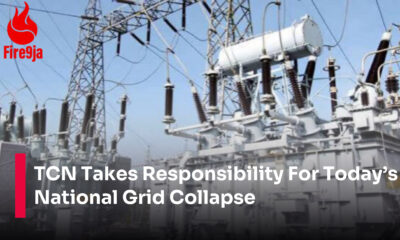
At the heart of the National Grid’s operation are three key players: Generation Companies (GenCos), Transmission Company of Nigeria (TCN), and Distribution Companies (DisCos).
GenCos are responsible for generating electricity in megawatts (MW).
This generated electricity is then transmitted by TCN, which ensures that it moves efficiently across the country in kilovolts (kV).
Finally, DisCos took over the job of distributing the electricity to homes, businesses, and other end users across Nigeria.
These three steps—generation, transmission, and distribution—form what is known as the power cycle.
The rate at which this cycle occurs is crucial and is technically referred to as the frequency, which is measured in megahertz (mHz).
The Nigerian national grid operates at a frequency of 50mHz.
The frequency must remain stable within this range because any significant deviation can lead to severe damage to electrical appliances and equipment.
Maintaining this balance is crucial for the safety of both the national grid system and the numerous devices that depend on consistent power.
However, when a fault occurs—whether it is from the generation, transmission, or distribution stages—it can throw the entire system off balance.
This is when the system triggers what is known as a “SELF TRIP” mechanism, designed to protect the grid from further damage.
This is what is referred to as a grid collapse. Essentially, the mechanism is designed to shut down parts of the grid to prevent a full-scale disaster.
In a bid to prevent this from happening, grid disturbances are sometimes classified as “preemptive resets” by system operators.
These disturbances occur when operators take action to reset the grid ahead of time, effectively forestalling a potential collapse.
This is done to maintain the stability of the grid and avoid widespread power outages that could have catastrophic consequences.
The Nigerian power sector has faced these challenges for years, with frequent grid collapses and power interruptions frustrating citizens and businesses alike.
The reasons behind these collapses can vary, from technical faults to issues with generation capacity or even failures in transmission and distribution infrastructure.
Despite these hurdles, efforts to stabilize the grid have been ongoing, with discussions around improving generation capacity, enhancing infrastructure, and better managing the frequency.









The Academic Staff Union of Universities (ASUU) has reportedly declared a strike at Taraba State University over outstanding salary-related demands and delays in payments.
The strike is scheduled to begin today, October 12, 2026. According to the union’s chairman, the union had been engaging the Taraba State Government over its outstanding demands since February 2026.
“The union had exercised considerable patience and demonstrated its commitment to dialogue since February 2026, when it began engaging the Taraba State Government over the outstanding issues,” Mbave said.
“The union had earlier suspended its planned industrial action following an appeal by the government for additional time through the Office of the Head of Civil Service, in the interest of maintaining industrial harmony,” the chairman added.
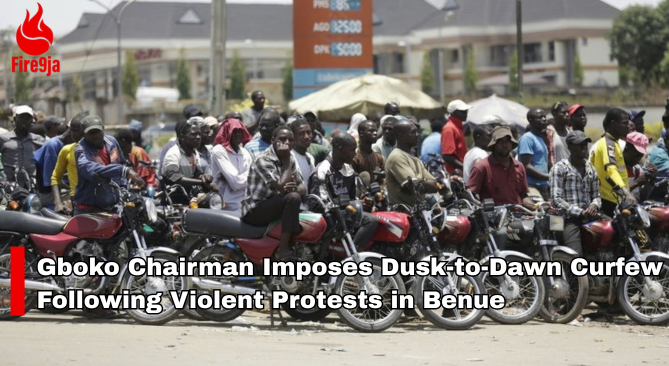
The Chairman of Gboko Local Government Area of Benue State, Torseer Yina, has imposed a dusk-to-dawn curfew in the ancient town.
The curfew takes effect from Thursday, October 8, 2026, following unrest and violent protests in the area.
According to reports, the action was taken to contain the unrest and violent protests by members of BEMOA following the death of one of its members by unknown gunmen.
The protest, which was reportedly hijacked by hoodlums, turned violent after an angry mob burnt two vehicles belonging to the Benue State Civil Protection Guards.
The Gboko council chairman said the curfew takes effect immediately and warned that anyone caught flouting the order or breaching public peace would be decisively dealt with.
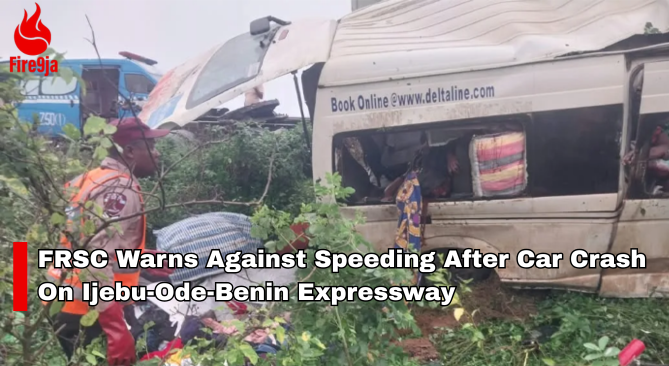
Nine people have died in a fatal road crash along the Ijebu-Ode-Benin Expressway in Ogun State.
The crash occurred on Monday at about 4:55pm around the Bethel area along the Ijebu-Ode/Ore axis of the expressway. It involved a white Toyota Hiace commercial bus belonging to Delta Line and a white Sino truck operated by Bill Gas Solution Ltd.
According to the Federal Road Safety Corps (FRSC), all nine people involved in the crash, comprising three males and six females, died in the incident.
The FRSC said the crash occurred while it was raining and the road was wet, with preliminary investigations identifying speed violation as the probable cause.
The FRSC rescue team arrived at the scene shortly after receiving the report, while the bodies of the victims were taken to the General Hospital Morgue in Ijebu-Ode.
The Ogun State Sector Commander, Oludare Ogunjobi, urged motorists, especially commercial drivers, to obey speed limits and exercise extra caution when driving in the rain.

Judge Tells Duane Davis He Must Face Justice for Tupac’s Murder

Timini Egbuson Reflects on Embracing YouTube Movies in Nollywood


