
Politics
World Leaders Face Pressure to Reform Global Institutions at U.N. Assembly

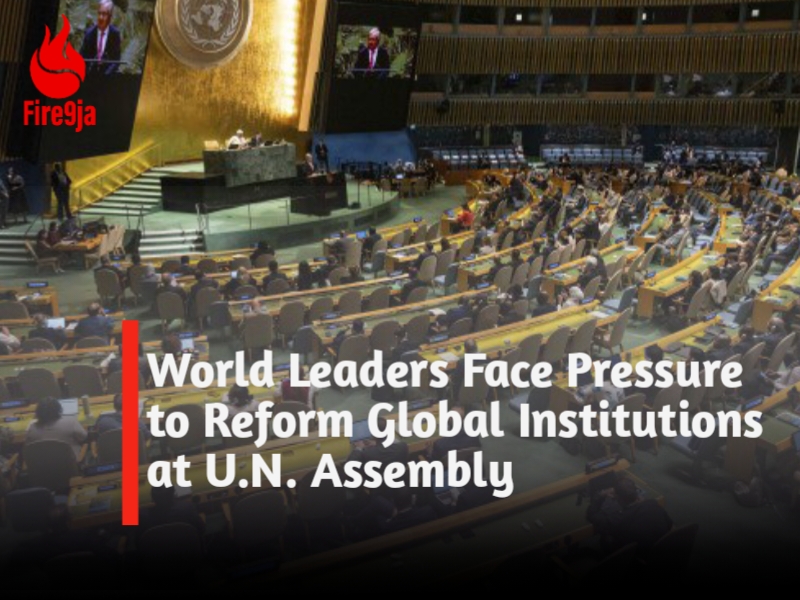
World leaders are gathering in New York this week for the United Nations General Assembly, facing a deeply fragmented world marked by mounting conflicts and crises.
The atmosphere is far from optimistic, as these global leaders are confronted with the urgent need to work together, not just on immediate concerns but also on reshaping the international institutions that were established in the aftermath of World War II.
These institutions, including the United Nations itself, were designed to tackle the issues of their time, but they now face growing challenges in keeping up with modern threats and global dynamics.
In a call to action, U.N. Secretary-General Antonio Guterres issued a stark reminder a year ago about the gravity of the situation facing humanity and the planet.
He urged world leaders to commit to attending a “Summit of the Future” to reexamine the role of multilateralism, which has long been the bedrock of the United Nations and numerous other global institutions.
This challenge emphasized the need for collective efforts to reform and modernize the international frameworks that govern global cooperation and problem-solving.
The goal of the gathering is not only to address immediate crises but to begin the hard work of overhauling an ageing global architecture that no longer fully meets the needs of a rapidly changing and increasingly interconnected world.
The focus is on ensuring that the structures in place are equipped to deal with the complex issues of the future—ranging from climate change and rising geopolitical tensions to technological advancements and socioeconomic inequalities.
As the world grapples with a growing sense of division and uncertainty, the leaders at the U.N. General Assembly are under intense pressure to rise above national interests and ideological differences.
The global community expects them to develop solutions that are both practical and forward-looking, ensuring that international cooperation remains strong in the face of emerging challenges.
The stakes are high, and this year’s discussions could shape the future of multilateralism and the ability of global institutions to remain effective in a rapidly evolving world.






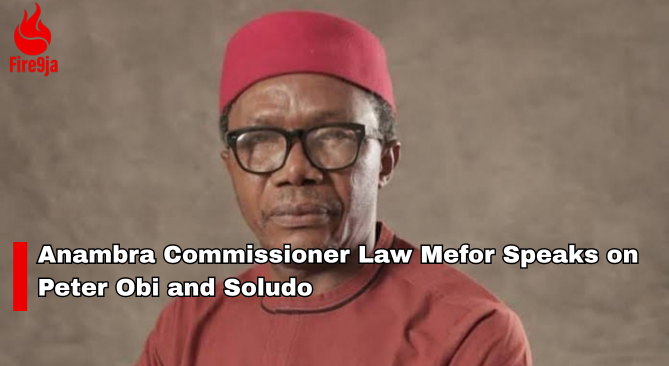
Anambra State Commissioner for Information and Value Reorientation, Law Mefor, speaks on Peter Obi and shares that he made wonderful achievements as a governor and roots for him for the presidency.
“The intention of the Anambra State government is not to indict Peter Obi. Peter Obi did well as governor.
“There is no rift between Governor Soludo and Peter Obi. They are both in politics, and they have their interests to defend.”
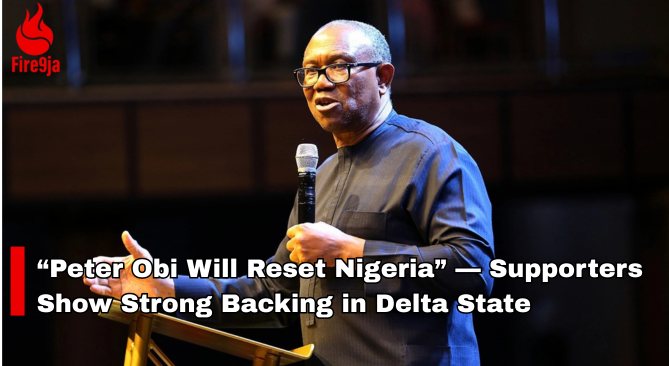
Peter Obi makes headlines as he received huge recognition and a welcome in Delta State.
A crowd came out to support the politician and show their support for him ahead of the election next year.
They moved with the message, “Peter Obi will reset Nigeria, Peter Obi for president.” Many shared their beliefs that Peter Obi can truly help Nigeria. This has gained some attention, and people shared their thoughts.
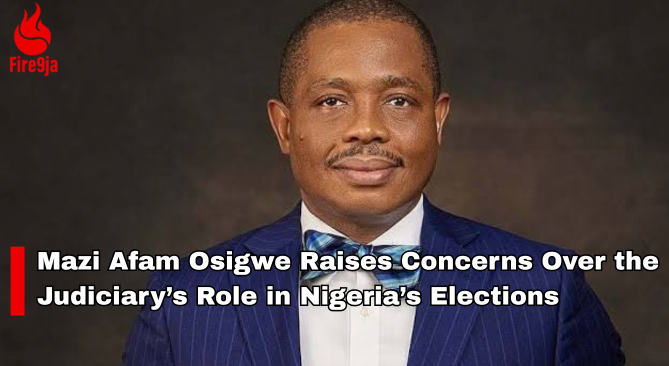
Former President of the Nigerian Bar Association, Mazi Afam Osigwe, speaks on the election and a popular notion that is happening. He shared how some politicians depend on the courts to win their elections instead of the voters (the people).
“A judge once presented a paper called ‘The Judicialisation of the Electoral Process.’ He argued that because of the difficulty of proving non-compliance with the Electoral Act, the courts have gradually and increasingly usurped the role of the voters. I couldn’t agree more.”
“They believe that between polling units and collation centres—especially at night—miracles happen before daybreak. So why vote?” he asked.

Walid Acherchour Backs Lamine Yamal to Win 2026 Ballon d’Or

Zlatan Announces Wedding Date With Longtime Partner Davita

11 New K-Dramas To Add To Your Watch-list This October 2026


-

 Entertainment14 hours ago
Bridgerton Announces Violet and Edmund Love Story Spin-Off
-

 Entertainment14 hours ago
Mr Eazi Sparks Reactions With Comment About Expecting Twins
-

 Entertainment14 hours ago
From Men in Black to Aladdin: 10 Will Smith Movies
-

 Entertainment14 hours ago
10 Global Music Stars Who Became Famous At A Young Age
-
 Entertainment14 hours ago
11 New K-Dramas To Add To Your Watch-list This October 2026
-
 Sport14 hours ago
Walid Acherchour Backs Lamine Yamal to Win 2026 Ballon d’Or
-
 Entertainment14 hours ago
Zlatan Announces Wedding Date With Longtime Partner Davita