
News
Don’t Politicise the Tax Reform Bills – Governor Uzodinma Urges Nigerians


Governor Hope Uzodinma of Imo State has urged Nigerians to approach the recently proposed tax reform bills with an open mind and avoid politicizing their purpose.
Speaking in Owerri, the state capital, the governor emphasized the importance of understanding the bills before passing judgment.
He pointed out that many critics of the bills have not thoroughly examined their content.
He explained that the proposed reforms are primarily aimed at improving the nation’s economic structure by generating more revenue for the government.
Additionally, the bills seek to streamline Nigeria’s tax system, ensuring that it becomes more efficient, organized, and less prone to abuses.
Uzodinma highlighted the significance of addressing the taxation regime in the country, which has long been criticized for being inconsistent and burdensome for businesses and individuals alike.
He noted that harmonizing the tax system would create a more transparent framework, enabling better compliance and fostering economic growth.
He further urged Nigerians to resist the temptation of using the bills as a tool for political propaganda or blackmail.
Instead, he encouraged them to critically analyze the proposed reforms, offering constructive feedback where necessary.
“This is a serious economic document,” Uzodinma stated, “and it deserves to be scrutinized with the intent to improve it, not to diminish its value through unnecessary politics.”
Governor Uzodinma also reminded citizens that the tax reform bills are executive initiatives introduced under the leadership of President Bola Ahmed Tinubu.
He called on stakeholders, including lawmakers, economists, and citizens, to approach the bills with the seriousness they deserve, given their potential to shape the nation’s financial future.


The Academic Staff Union of Universities (ASUU) has reportedly declared a strike at Taraba State University over outstanding salary-related demands and delays in payments.
The strike is scheduled to begin today, October 12, 2026. According to the union’s chairman, the union had been engaging the Taraba State Government over its outstanding demands since February 2026.
“The union had exercised considerable patience and demonstrated its commitment to dialogue since February 2026, when it began engaging the Taraba State Government over the outstanding issues,” Mbave said.
“The union had earlier suspended its planned industrial action following an appeal by the government for additional time through the Office of the Head of Civil Service, in the interest of maintaining industrial harmony,” the chairman added.
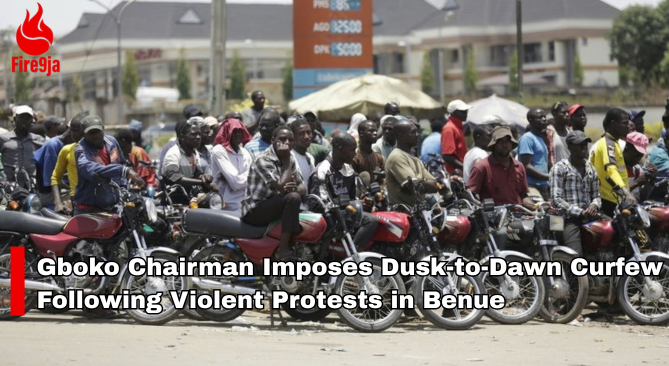
The Chairman of Gboko Local Government Area of Benue State, Torseer Yina, has imposed a dusk-to-dawn curfew in the ancient town.
The curfew takes effect from Thursday, October 8, 2026, following unrest and violent protests in the area.
According to reports, the action was taken to contain the unrest and violent protests by members of BEMOA following the death of one of its members by unknown gunmen.
The protest, which was reportedly hijacked by hoodlums, turned violent after an angry mob burnt two vehicles belonging to the Benue State Civil Protection Guards.
The Gboko council chairman said the curfew takes effect immediately and warned that anyone caught flouting the order or breaching public peace would be decisively dealt with.

Nine people have died in a fatal road crash along the Ijebu-Ode-Benin Expressway in Ogun State.
The crash occurred on Monday at about 4:55pm around the Bethel area along the Ijebu-Ode/Ore axis of the expressway. It involved a white Toyota Hiace commercial bus belonging to Delta Line and a white Sino truck operated by Bill Gas Solution Ltd.
According to the Federal Road Safety Corps (FRSC), all nine people involved in the crash, comprising three males and six females, died in the incident.
The FRSC said the crash occurred while it was raining and the road was wet, with preliminary investigations identifying speed violation as the probable cause.
The FRSC rescue team arrived at the scene shortly after receiving the report, while the bodies of the victims were taken to the General Hospital Morgue in Ijebu-Ode.
The Ogun State Sector Commander, Oludare Ogunjobi, urged motorists, especially commercial drivers, to obey speed limits and exercise extra caution when driving in the rain.

Judge Tells Duane Davis He Must Face Justice for Tupac’s Murder

Timini Egbuson Reflects on Embracing YouTube Movies in Nollywood


