
News
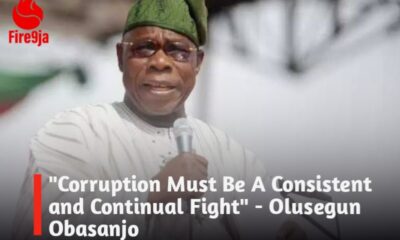
“Nigeria’s Challenges Stem from Poor Leadership, Not Complexity” – Obasanjo

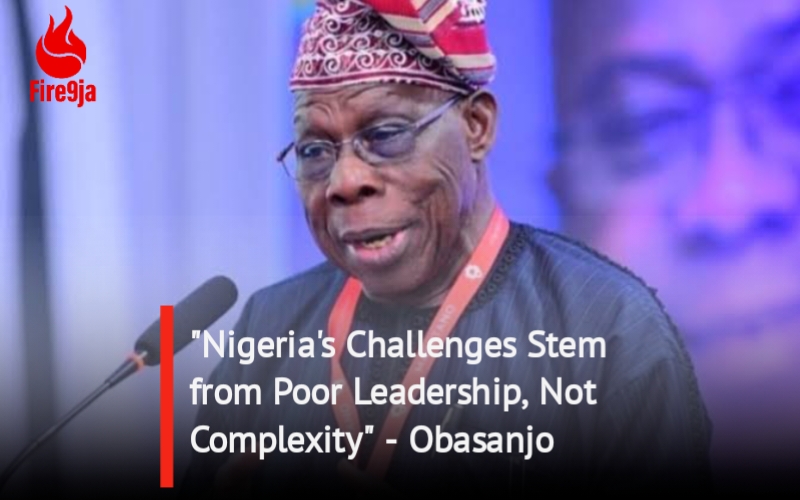
Former President Olusegun Obasanjo has emphasized that Nigeria is not inherently difficult to manage, attributing the country’s challenges to inadequate leadership rather than its complexity.
Speaking at the maiden memorial lecture in honour of the late Akintola Williams in Lagos, Obasanjo stressed that while Nigeria is a multifaceted nation, it requires understanding and competent management, which has often been lacking in its leadership.
The event, titled *“Leadership Dynamics: Current Realities and Way Forward,”* was organized by the Institute of Chartered Accountants of Nigeria (ICAN) in Lagos.
During his address, Obasanjo noted that managing Nigeria effectively demands a deep comprehension of its complexities but dismissed the notion that it is an impossible task.
He urged leaders to be honest with themselves, the nation, and their faith as they navigate the responsibilities of governance.
“Nigeria is indeed a complex country, and that is something we must acknowledge,” Obasanjo stated.
“But it is not a difficult country to manage. What we need is leadership that is transparent, committed, and genuinely invested in the well-being of the people.”
Reflecting on his time in office, Obasanjo recounted his efforts to stabilize and grow Nigeria’s economy.
He expressed pride in the initiatives undertaken during his presidency, especially in managing the country’s finances, and noted that Nigeria’s economic condition was relatively strong under his leadership.
“When I served as president, I did everything I could with the resources available to me,” Obasanjo said.
“I can confidently say I gave my best to move the country forward.
For example, when I assumed office, Nigeria had only N3.7 billion in reserves, while we were spending N3.5 billion on servicing debts.
Faced with this, I prioritized seeking debt relief for the country. Despite being one of the top five oil exporters globally at the time, we were burdened by an unsustainable debt load.”
Obasanjo went on to detail the efforts that led to Nigeria securing debt relief, a significant achievement during his tenure.
He explained that the country’s debt burden, initially at N3.36 billion, was substantially reduced, allowing for a period of fiscal stability.
He also highlighted that by the time he left office, the country’s reserves had grown significantly.
“We didn’t just secure debt relief; we turned the situation around. By the time I left office, Nigeria had over N25 billion in excess crude, which was money saved from the budget surplus.
Additionally, our foreign reserves exceeded N45 billion, which positioned us for future growth and economic security,” he added.
In his tribute to the late Akintola Williams, Obasanjo lauded the iconic chartered accountant for his numerous contributions to Nigeria.
Williams, who was regarded as a pioneer in the field of accounting in the country, was also recognized for his social, economic, and political impact.
“Akintola Williams was not just a professional; he was a sage whose influence extended beyond the financial sector.
His contributions to humanity, both in Nigeria and beyond, remain a lasting legacy.
He deserves all the honours we can bestow upon him, even posthumously, for the indelible marks he left in various spheres of life,” Obasanjo said.
The lecture provided an opportunity for the former president to reflect on the importance of effective leadership in shaping Nigeria’s future.
He reiterated that while challenges remain, with the right leadership, Nigeria has the potential to overcome its difficulties and thrive.
Obasanjo’s speech resonated with many attendees, especially given the current socio-political and economic climate of the nation.
His call for a deeper understanding of Nigeria’s complexities, coupled with his reflections on leadership, served as a reminder of the critical role governance plays in determining a nation’s trajectory.










The Chairman of Gboko Local Government Area of Benue State, Torseer Yina, has imposed a dusk-to-dawn curfew in the ancient town.
The curfew takes effect from Thursday, October 8, 2026, following unrest and violent protests in the area.
According to reports, the action was taken to contain the unrest and violent protests by members of BEMOA following the death of one of its members by unknown gunmen.
The protest, which was reportedly hijacked by hoodlums, turned violent after an angry mob burnt two vehicles belonging to the Benue State Civil Protection Guards.
The Gboko council chairman said the curfew takes effect immediately and warned that anyone caught flouting the order or breaching public peace would be decisively dealt with.

Nine people have died in a fatal road crash along the Ijebu-Ode-Benin Expressway in Ogun State.
The crash occurred on Monday at about 4:55pm around the Bethel area along the Ijebu-Ode/Ore axis of the expressway. It involved a white Toyota Hiace commercial bus belonging to Delta Line and a white Sino truck operated by Bill Gas Solution Ltd.
According to the Federal Road Safety Corps (FRSC), all nine people involved in the crash, comprising three males and six females, died in the incident.
The FRSC said the crash occurred while it was raining and the road was wet, with preliminary investigations identifying speed violation as the probable cause.
The FRSC rescue team arrived at the scene shortly after receiving the report, while the bodies of the victims were taken to the General Hospital Morgue in Ijebu-Ode.
The Ogun State Sector Commander, Oludare Ogunjobi, urged motorists, especially commercial drivers, to obey speed limits and exercise extra caution when driving in the rain.
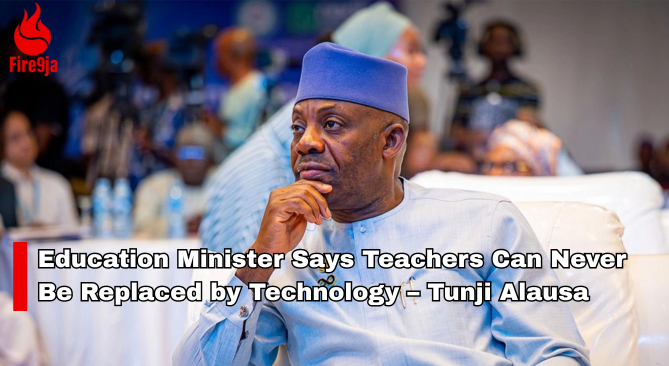
Minister of Education, Dr Tunji Alausa, speaks on the role and importance of teachers in the world to celebrate Teachers’ Day today.
He spoke on technology and its advancement and shared that while it is going well, teachers can never be replaced.
“These tools can help teachers reach learners and tailor instruction, but the judgement, encouragement and human connection of a skilled teacher remain indispensable,” he said.
“Every doctor, engineer, scientist, entrepreneur and public servant has benefited from a teacher and could not have become what they are today without teachers,” the minister said.
“When we honour teachers, we honour the people who make every other profession possible.”

Walid Acherchour Backs Lamine Yamal to Win 2026 Ballon d’Or

Zlatan Announces Wedding Date With Longtime Partner Davita

11 New K-Dramas To Add To Your Watch-list This October 2026


-

 Entertainment13 hours ago
Bridgerton Announces Violet and Edmund Love Story Spin-Off
-

 Entertainment13 hours ago
Mr Eazi Sparks Reactions With Comment About Expecting Twins
-

 Entertainment13 hours ago
From Men in Black to Aladdin: 10 Will Smith Movies
-

 Entertainment13 hours ago
10 Global Music Stars Who Became Famous At A Young Age
-
 Entertainment13 hours ago
11 New K-Dramas To Add To Your Watch-list This October 2026
-
 Sport13 hours ago
Walid Acherchour Backs Lamine Yamal to Win 2026 Ballon d’Or
-
 Entertainment13 hours ago
Zlatan Announces Wedding Date With Longtime Partner Davita