
News
Peter Obi Calls for Agricultural Investment to Tackle Africa’s Food and Human Insecurity

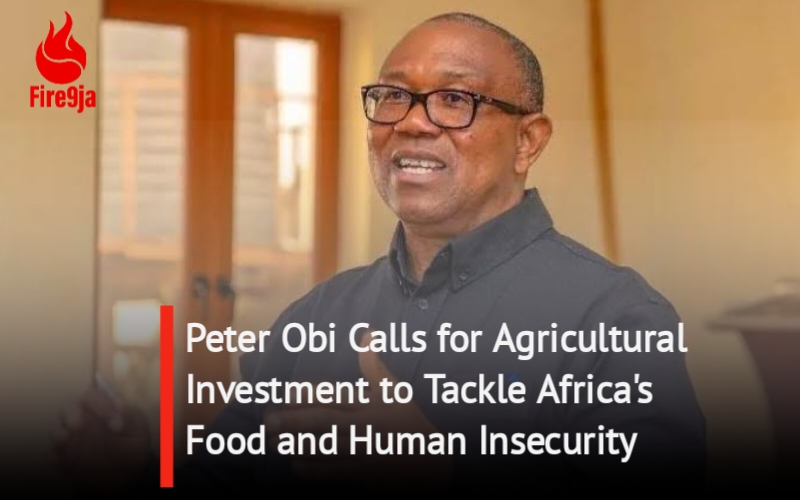
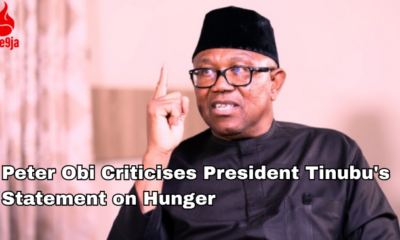
At the Africa Food Systems Forum 2024 held in Kigali, Rwanda, former Nigerian presidential candidate Peter Obi delivered a powerful message on the urgent need to address food insecurity across the continent.
Speaking as one of the panellists, Obi underscored the intrinsic link between food insecurity and human insecurity in Africa, using Nigeria as a case study.
In his address, Obi stressed that solving food insecurity is not just about addressing hunger, but also about creating massive job opportunities, particularly for the continent’s growing youth population.
He pointed out that investing in agriculture and food-related productivity could pave the way for general security in countries like Nigeria, where food shortages and unemployment are major concerns.
“By reducing reliance on food imports, Nigeria can ease the strain on its currency, stabilize exchange rates, and curb inflation caused by high food costs,” Obi noted.
To highlight Africa’s untapped agricultural potential, Obi compared Nigeria’s rice production with that of Bangladesh.
While Bangladesh, with a landmass six times smaller than Nigeria, produces 35-40 million tons of rice annually, Nigeria only produces 3-4 million tons—roughly 10% of Bangladesh’s output.
This disparity, according to Obi, reflects a broader challenge across Africa that can be tackled through targeted investments.
“Food insecurity, if addressed properly, can catalyze enhancing human security and driving overall development,” he said, calling for a holistic approach that includes sustainable agricultural practices and value-chain improvements.
Obi concluded by reaffirming that a food-secure Africa is central to achieving prosperity and stability.
He urged leaders and stakeholders to prioritize food systems as a means to empower communities, boost economic growth, and build a more secure and self-sufficient Africa.










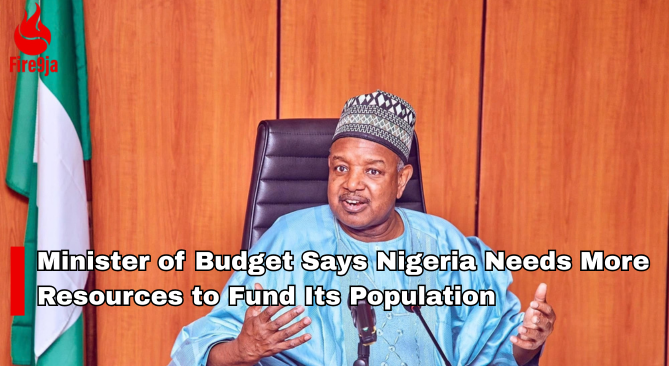
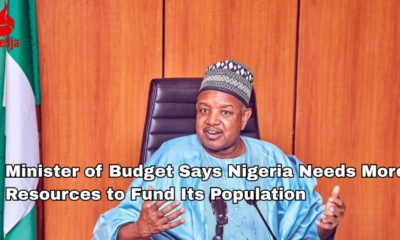
The Minister of Budget and Economic Planning for Nigeria, Senator Abubakar Bagudu, shared that the budget Nigeria currently has is too small for the population the country contains.
Speaking on the budget, he said “I would like to say that out of the top 10 most populous countries in the world, we have the smallest national budget.
“Should we continue with a budget that leaves our populace with one of the smallest budgets, or should we consider how we can mobilise more resources?”
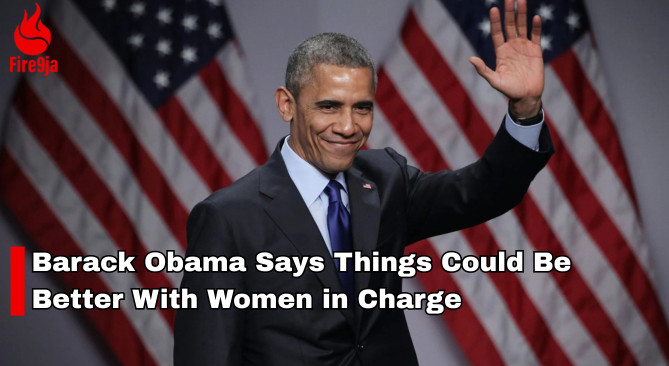
Former US President and first Black president, Barack Obama, speaks on leadership and gender. He spoke about how it would be nice for women to be in charge every now and then, as it would strike a balance and advance the government.
“Even when I was President, I sometimes fantasized about if you put women in charge of every government for like two years, and then just kind of saw, ‘All right, how are things going?’”
“I have a strong belief that things wouldn’t be perfect, but they’d be better. I’m confident about that. I really do,” he added.
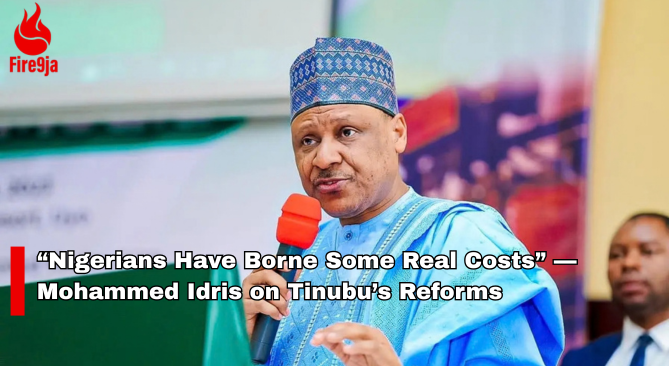
Minister of Information and National Orientation, Mohammed Idris, speaks on the state of the country and President Tinubu’s reign.
He analyses it and shares how Tinubu has made tough decisions. “About three years ago, President Bola Tinubu assumed office amid some very significant and structural challenges, and physical challenges.”
“His administration chose to confront the long-standing distortions rather than postpone them, and those decisions were indeed very difficult and were not politically convenient. And because of those decisions, Nigerians have borne some real costs.”
“Today, however, Nigeria is moving from the difficult work of reforms and stabilisation towards a new phase of growth and shared prosperity.”

Jazzma Kendrick Speaks Out After Alleged Domestic Violence Incident With Rick Ross

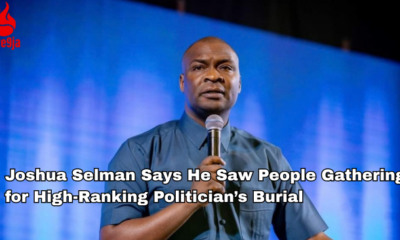
Joshua Selman Says He Saw People Gathering for High-Ranking Politician’s Burial

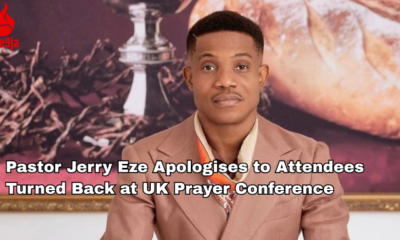
Pastor Jerry Eze Apologises to Attendees Turned Back at UK Prayer Conference


-
 Entertainment3 hours ago
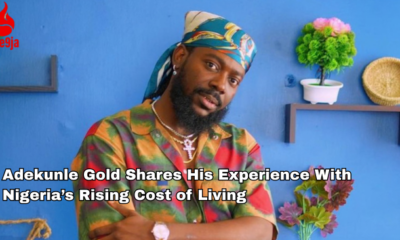
Adekunle Gold Shares His Experience With Nigeria’s Rising Cost of Living
-
 News3 hours ago
Minister of Budget Says Nigeria Needs More Resources to Fund Its Population
-
 Entertainment3 hours ago
Big Brother Naija Is Not as Relevant as Before – Ubi Franklin
-
 Entertainment3 hours ago
‘2027 Election Is Between the Poor and the Paid Poor’ – I Go Save
-
 Entertainment2 hours ago
Pastor Jerry Eze Apologises to Attendees Turned Back at UK Prayer Conference
-
 Entertainment2 hours ago
Joshua Selman Says He Saw People Gathering for High-Ranking Politician’s Burial
-
 Entertainment1 hour ago
Jazzma Kendrick Speaks Out After Alleged Domestic Violence Incident With Rick Ross