
News
Nigeria Targets 20-Hour Daily Power Supply by 2027 with Investment Reforms

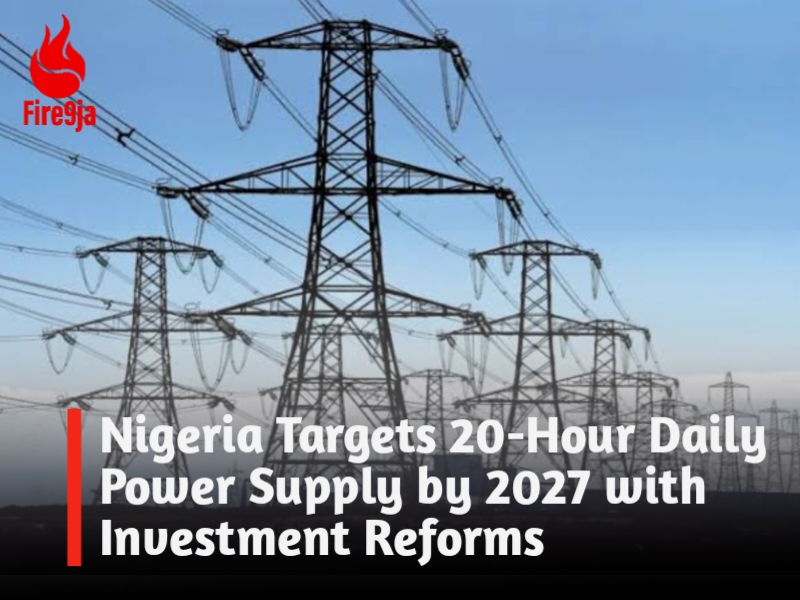
Nigeria’s ambitious target of providing at least 20 hours of electricity daily by 2027 hinges on a significant boost in investments, especially in the oil and gas sectors.
Olu Verheijen, Special Adviser on Energy to President Bola Tinubu, recently underscored this at the Africa Energy Week in Cape Town, South Africa.
In a statement released by Abiodun Oladunjoye, the State House Director of Information and Publicity, Verheijen detailed the federal government’s plans to revitalize Nigeria’s power sector and improve electricity access for Nigerians.
Currently, Nigeria’s power grid is plagued by challenges, with its most recent collapse marking the 10th outage since the start of 2024.
The government has attributed these frequent failures to outdated infrastructure, a lack of regular maintenance, and chronic underinvestment.
Despite Nigeria’s impressive installed capacity of about 12,500 megawatts, only a fraction of this power is regularly generated, leaving vast areas of the country without stable electricity.
Verheijen noted that Nigeria is pushing to provide consistent power to urban and industrial areas as a cornerstone of economic development.
The government has a range of initiatives aimed at addressing these challenges.
For example, revenue collection reforms are underway to increase accountability, along with the deployment of seven million smart meters to minimize energy losses.
Additionally, there are plans to expand off-grid solutions to ensure remote communities have access to electricity, which will help bridge the gap in underserved regions.
Verheijen emphasized that recent macroeconomic reforms, including the removal of the petrol subsidy and foreign exchange liberalization, signal Nigeria’s readiness for a new era of growth.
She urged foreign investors to see these changes as an open invitation to partner with Nigeria, mentioning that the Tinubu administration is actively pursuing policies to attract investment.
As part of the broader Presidential Gas for Growth Initiative, the government is focusing on midstream and downstream investments, including in compressed natural gas (CNG), liquefied petroleum gas (LPG), and electric vehicles.
The administration aims to reduce dependency on petrol and diesel, particularly in transport, decentralized power generation, and cooking, while fostering demand for cleaner alternatives like electric vehicles.
While discussing Nigeria’s oil and gas potential, Verheijen compared the country’s performance to that of Brazil, which has managed to produce 131 percent more oil than Nigeria, despite having only 30 percent of its oil reserves.
This gap, she argued, is largely due to underinvestment.
She lamented the fact that since 2016, Nigeria has attracted only 4 percent of Africa’s oil and gas investments, whereas other, less resource-rich African nations have managed to capture a larger share of investor interest.
To reverse this trend, the Tinubu administration is implementing reforms aimed at making Nigeria’s oil and gas sector more competitive.
For the first time since the beginning of deepwater exploration in 1991, Nigeria is introducing a specific fiscal framework for deepwater gas projects, as well as incentives to stimulate investment in non-associated gas production.
Verheijen noted that these new policies are designed to increase investor confidence and unlock Nigeria’s potential, enabling international oil companies to bring more capital to Nigeria’s shores.













The Chairman of Gboko Local Government Area of Benue State, Torseer Yina, has imposed a dusk-to-dawn curfew in the ancient town.
The curfew takes effect from Thursday, October 8, 2026, following unrest and violent protests in the area.
According to reports, the action was taken to contain the unrest and violent protests by members of BEMOA following the death of one of its members by unknown gunmen.
The protest, which was reportedly hijacked by hoodlums, turned violent after an angry mob burnt two vehicles belonging to the Benue State Civil Protection Guards.
The Gboko council chairman said the curfew takes effect immediately and warned that anyone caught flouting the order or breaching public peace would be decisively dealt with.

Nine people have died in a fatal road crash along the Ijebu-Ode-Benin Expressway in Ogun State.
The crash occurred on Monday at about 4:55pm around the Bethel area along the Ijebu-Ode/Ore axis of the expressway. It involved a white Toyota Hiace commercial bus belonging to Delta Line and a white Sino truck operated by Bill Gas Solution Ltd.
According to the Federal Road Safety Corps (FRSC), all nine people involved in the crash, comprising three males and six females, died in the incident.
The FRSC said the crash occurred while it was raining and the road was wet, with preliminary investigations identifying speed violation as the probable cause.
The FRSC rescue team arrived at the scene shortly after receiving the report, while the bodies of the victims were taken to the General Hospital Morgue in Ijebu-Ode.
The Ogun State Sector Commander, Oludare Ogunjobi, urged motorists, especially commercial drivers, to obey speed limits and exercise extra caution when driving in the rain.
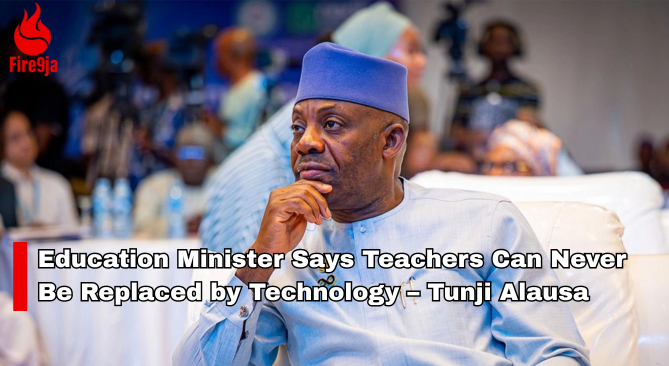
Minister of Education, Dr Tunji Alausa, speaks on the role and importance of teachers in the world to celebrate Teachers’ Day today.
He spoke on technology and its advancement and shared that while it is going well, teachers can never be replaced.
“These tools can help teachers reach learners and tailor instruction, but the judgement, encouragement and human connection of a skilled teacher remain indispensable,” he said.
“Every doctor, engineer, scientist, entrepreneur and public servant has benefited from a teacher and could not have become what they are today without teachers,” the minister said.
“When we honour teachers, we honour the people who make every other profession possible.”

Walid Acherchour Backs Lamine Yamal to Win 2026 Ballon d’Or

Zlatan Announces Wedding Date With Longtime Partner Davita

11 New K-Dramas To Add To Your Watch-list This October 2026


-

 Entertainment10 hours ago
Bridgerton Announces Violet and Edmund Love Story Spin-Off
-

 Entertainment10 hours ago
Mr Eazi Sparks Reactions With Comment About Expecting Twins
-

 Entertainment10 hours ago
From Men in Black to Aladdin: 10 Will Smith Movies
-

 Entertainment10 hours ago
10 Global Music Stars Who Became Famous At A Young Age
-
 Entertainment10 hours ago
11 New K-Dramas To Add To Your Watch-list This October 2026
-
 Sport10 hours ago
Walid Acherchour Backs Lamine Yamal to Win 2026 Ballon d’Or
-
 Entertainment10 hours ago
Zlatan Announces Wedding Date With Longtime Partner Davita